The Project observations section is intended as a knowledge-sharing space about a number of scenographic telepresence projects. The case studies presented below share relevant experiences with the practitioner community, by answering questions such as:
- What motivated the use of telepresence in this project?
- How is telepresence approached/used in this project?
- What adaptation was made to usual practice to meet telepresence requirements?
- What were the project’s intentions and how were they expressed?
- What staging was chosen for this project and for what purpose? What was the layout of the installation?
- What interactions took place between the protagonists?
- What interactions took place with the audience?
- What work methodology was used to work remotely?
¶ Onirisme
Onirisme is the second telepresence project by the creator Isabelle Clermont, following her first work combining musical and physical performance, titled Les Offrandes. For Onirisme, she aimed to develop a work that would be both rich and meaningful for each connected venue. The artistic intentions addressed both staging and work methods specific to telepresence.
¶ How to create a sculptural, immersive space on stage?
Video projection onto a conventional screen can often flatten the staged content. One of the goals of the Onirisme project was therefore to energize the immersive stage space using malleable projection surfaces with which the performers could interact.
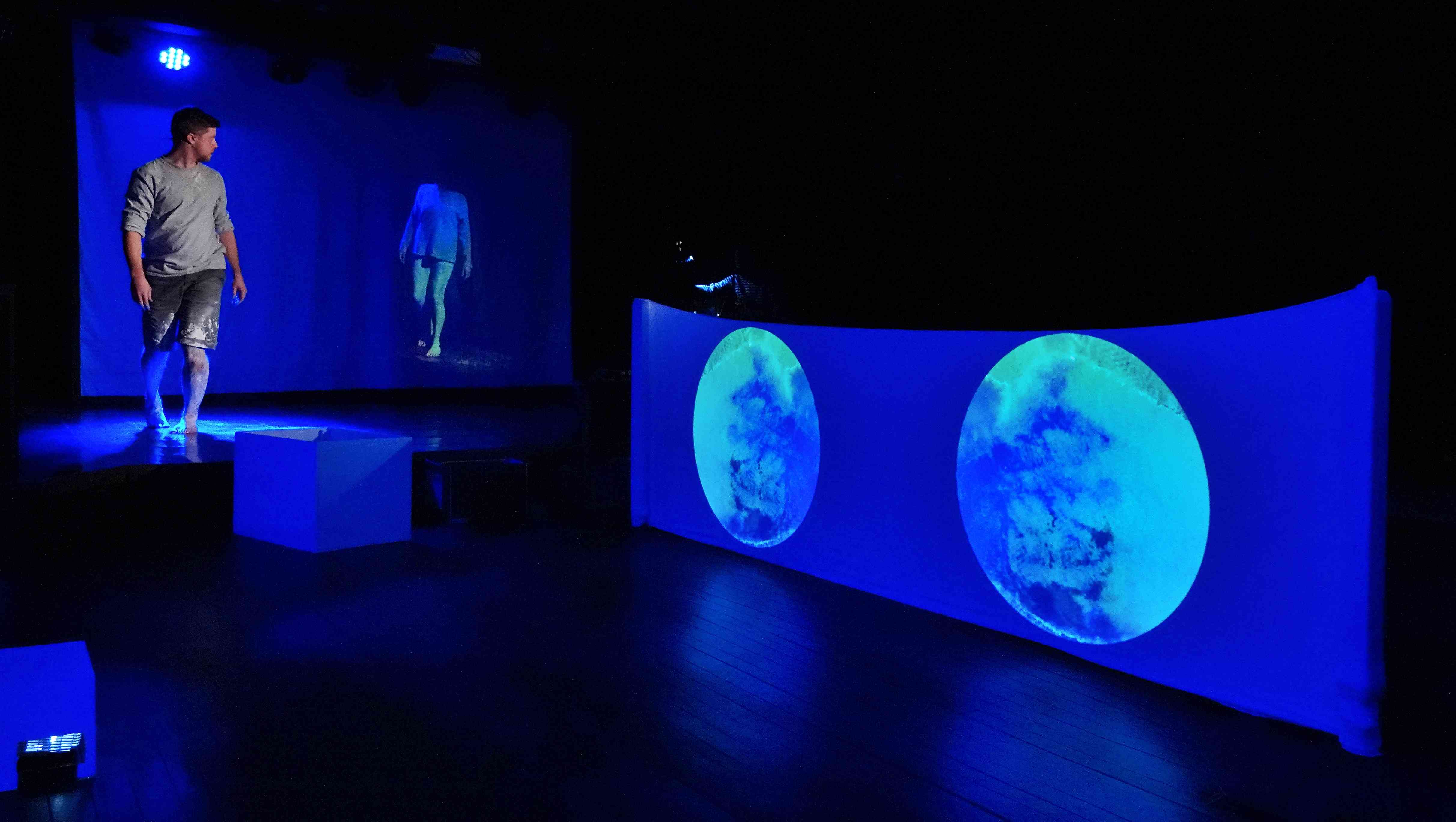
In terms of scenography, one projection surface was installed at the rear of the raised stage, while another consisted of a long piece of spandex mounted lower and perpendicular to the stage. This elastic, malleable surface made it possible to connect the performers’ bodies with an element of the staging.
.jpg)
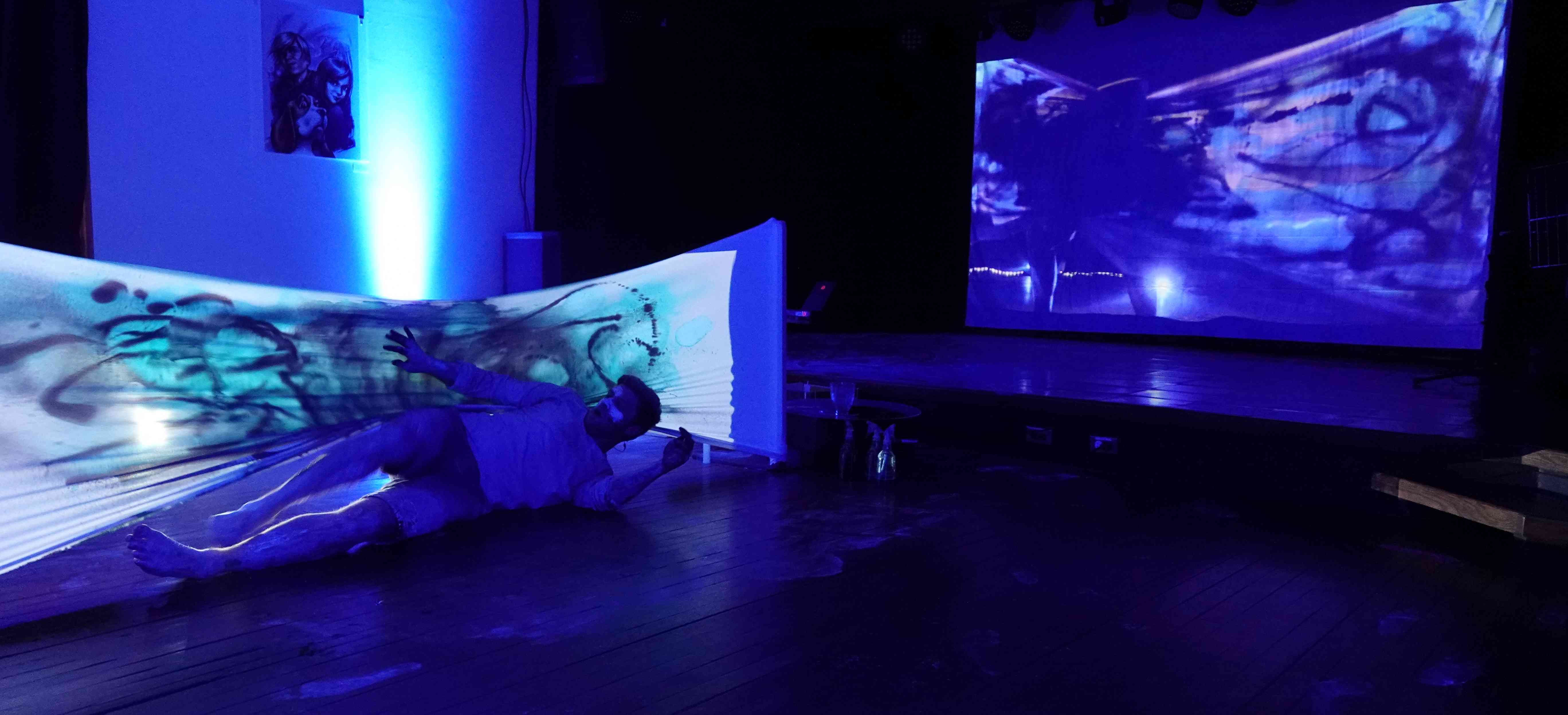
Indeed, the performers could manipulate this projection surface—displaying the image coming from the other venue—to make the presence or absence of the distant partner manifest. In addition, illuminated tulle scrims placed on either side of the stage frame contributed to the dynamic and immersive character of the scene.
Using many projection surfaces requires additional hardware resources, which can increase the technical complexity and costs associated with the project.
¶ How to develop a balanced experience between venues
After an initial experience where the balance between the two venues sometimes felt uneven, the creator sought to adjust the performance to achieve a similar intensity on each side.
By establishing a stage parity, the performance now involves one performer and one musician on the stage in each venue, along with identical scenic installations. In return, it is instead the actions of the performers that differ or complement each other. For example, while one person in venue A is in a bath, the person in venue B creates shapes on them using acetate sheets.
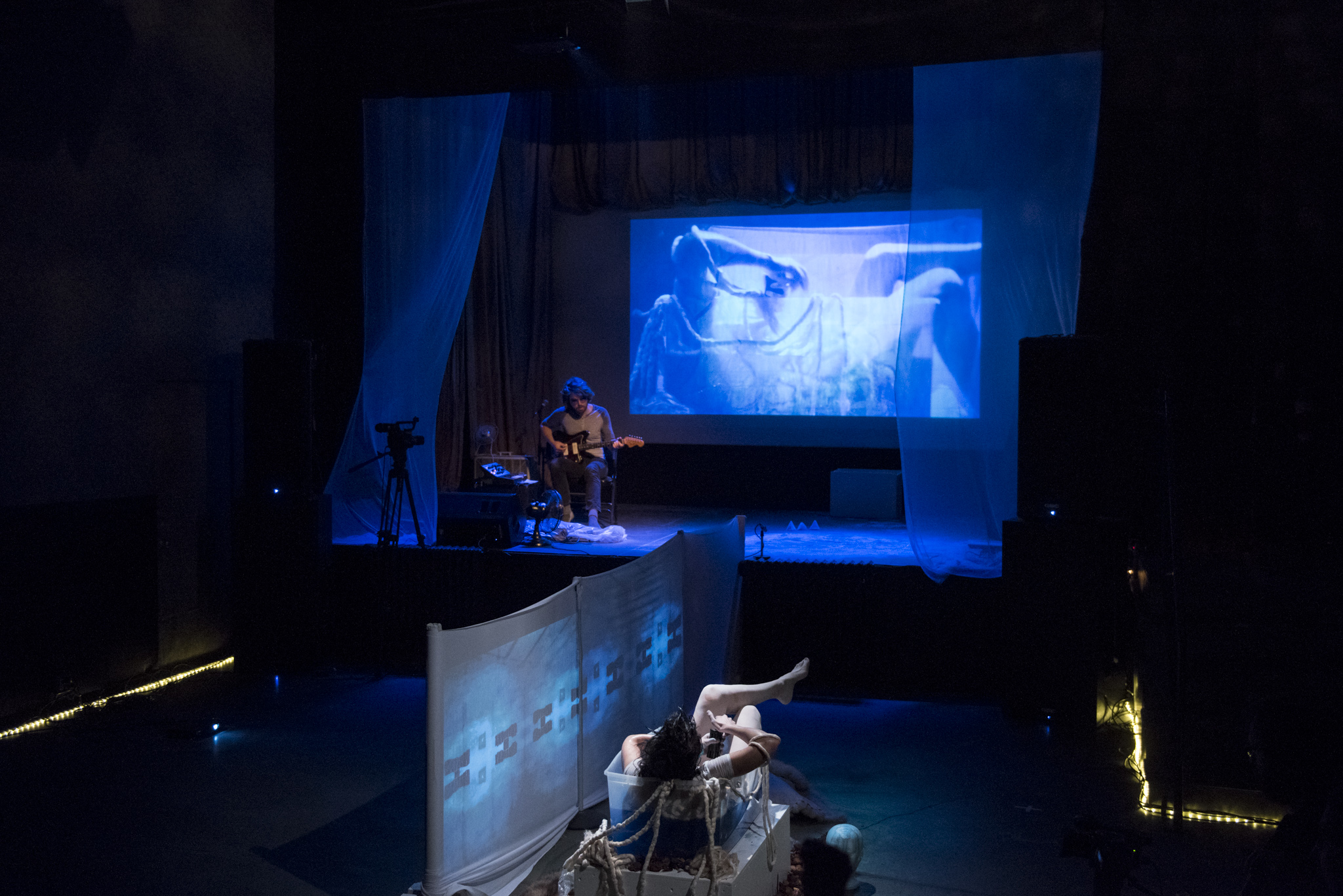
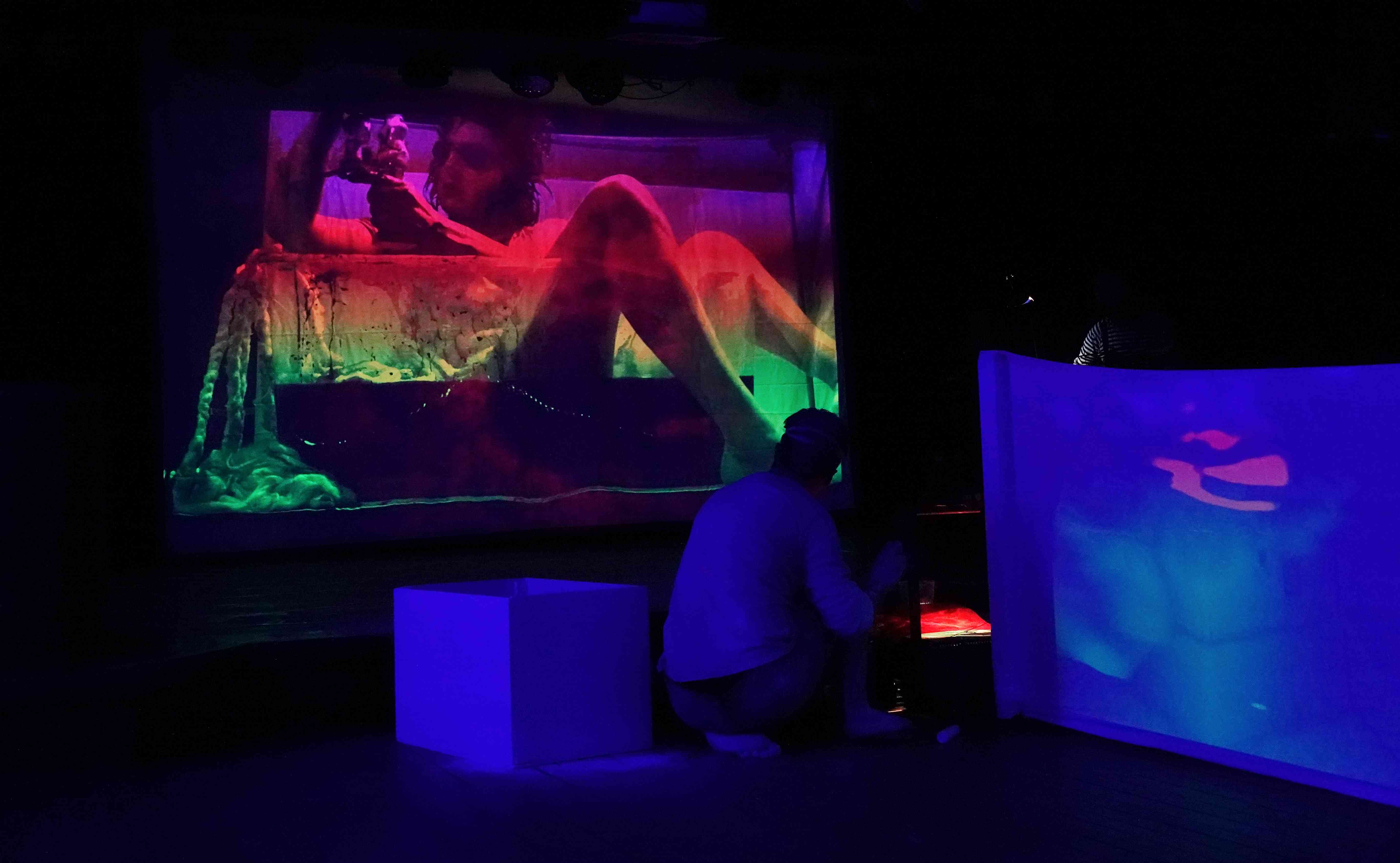
Moreover, the interdependence between the two venues allows each to be highlighted for all audiences; the dialogue between distant performers was balanced so that the mediated and immediate experience felt equivalent for each audience. This approach created an experience of similar value for each venue and prevented one audience from being merely a spectator of what was happening in the other venue.
¶ How to develop the connection between distant artists?
During her first telepresence experience, the artist was not very aware of the constraints of remote work. That is why preparatory work sessions were initiated ahead of the Onirisme residency so that the partners could first develop a working chemistry through more direct interaction and facilitate the continuation of the work once apart.
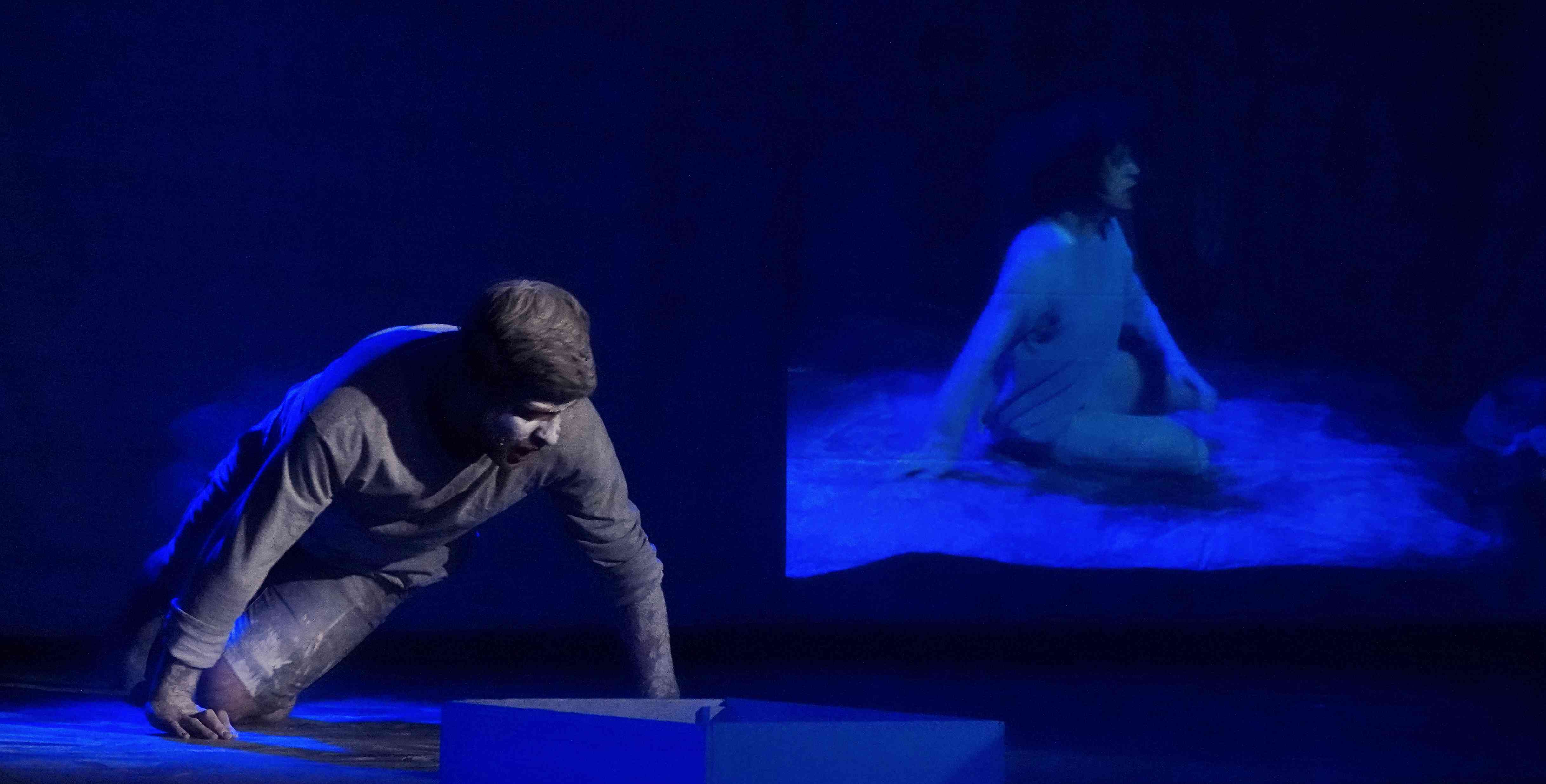
Thus, the two performers had the opportunity to talk and meet in person during rehearsals where, with the help of a choreographer, they simulated distance by isolating from each other within the space.
.jpg)
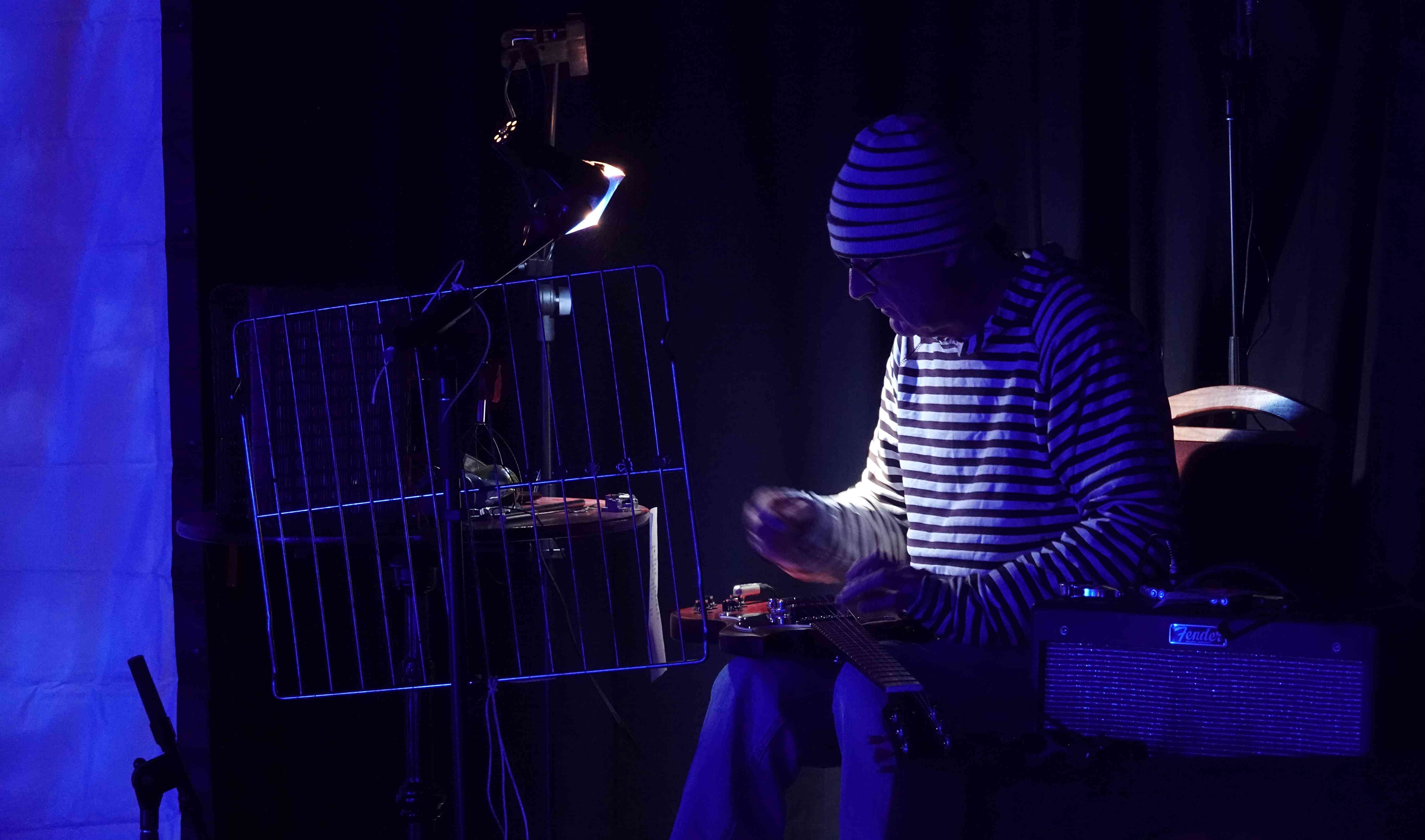
The musicians, for their part, were able to exchange musical excerpts to define the universe of each scene, requiring very little direction afterward. These first in-person meetings, which are not always possible, proved in this case to be an effective way to develop a symbiosis between the partners and to more easily adapt to remote work afterwards.
¶ Bluff
¶ What text works for telepresence?
The development of the Bluff project took place over several residencies. This process allowed the creative team to tame the medium of telepresence and to build a work in an exploratory, iterative way. The research issues targeted during the second residency were important for establishing the project’s foundations; the team questioned what type of dramatic text and themes are suitable for telepresence, what scenography would allow the spatialization of a circular assembly—where three distinct audiences are present and can see each other simultaneously—and how to engage the audience in the performance.
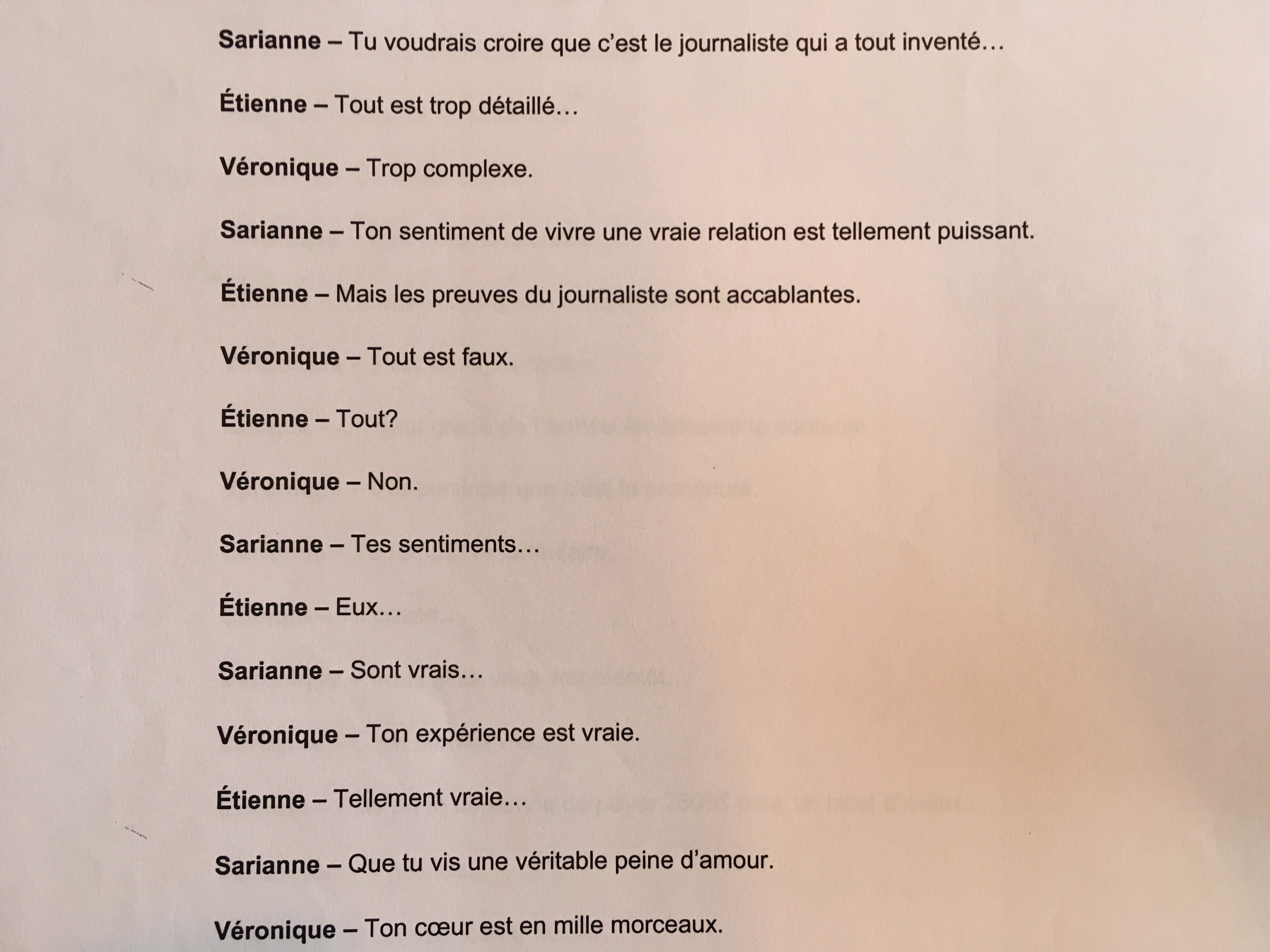
Unable to transpose a traditional text into the telepresence context, the team decided to write their own. The dramaturgy is inspired by contemporary, more fragmented writing in which actors play their own roles. The goal is to create an interdependence of play between the actors and with the audience, anchoring the text in the immediacy of performance.
The text was composed from actors’ improvisation exercises. Performing a current situation works well in telepresence; the audience notices a “gradient between non-performance and performance” where it’s no longer clear whether the actor is in character or not. Additionally, themes of truth and authenticity resonate in the experience offered to the audience (like a mise en abyme).
¶ What staging allows connecting not only the actors but also the audiences across three venues?
From a scenographic perspective, the starting point is to allow actors to discuss together naturally, while also being able to see and address the audiences simultaneously.
.jpg)
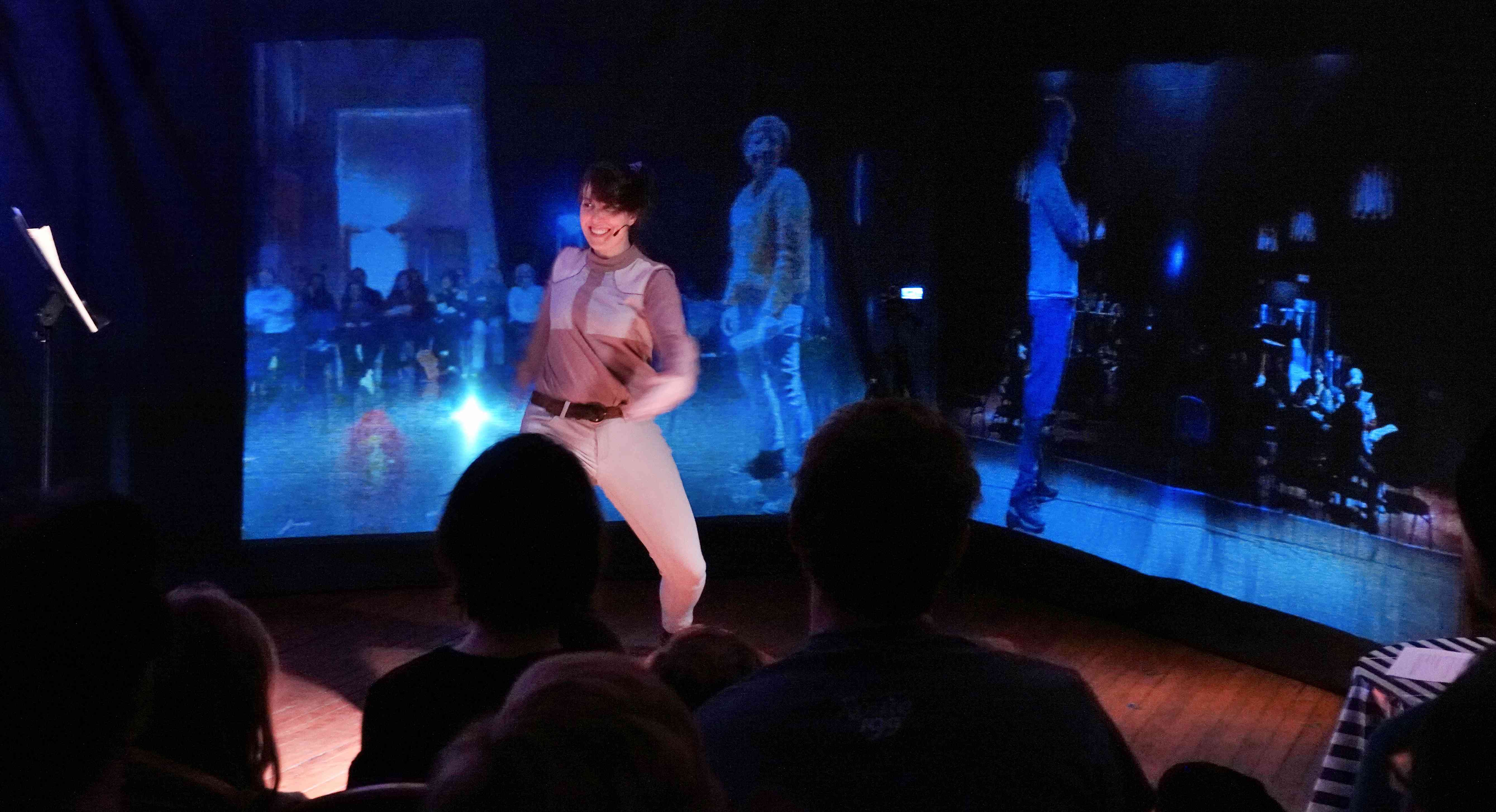
The proposed stage design includes two large screens arranged at the back of the stage with a 120˚ angle between them, displaying the distant audiences to create a circular assembly.
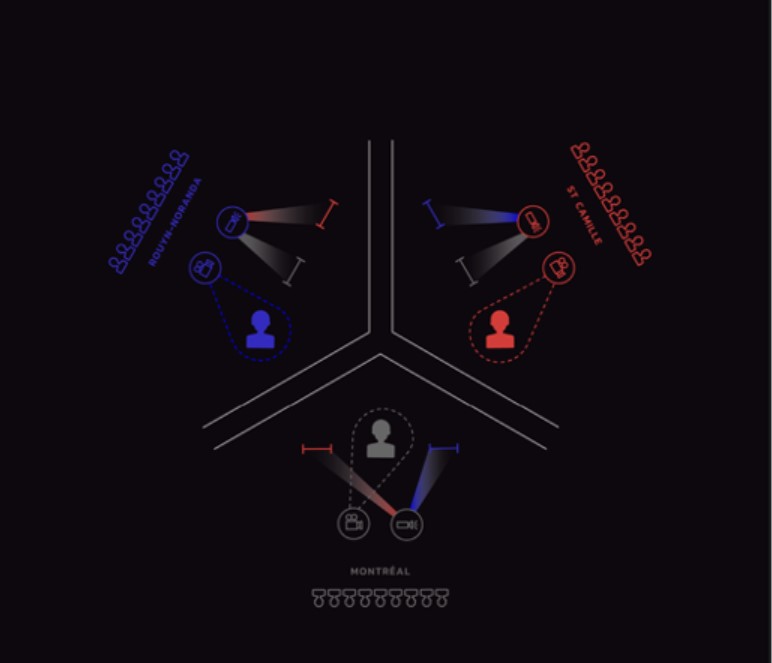
In addition, mobile vertical screens project the protagonists from head to toe.

The designed scenography encourages buy-in from both the actors and the audiences. Using vertical screens makes it possible to create custom scenographies that reinforce the impression that the actors are “playing together” through the natural coordination of gestures and glances.

The two large back screens sometimes display the distant audiences, sometimes the distant scenes, and occasionally shared content elements (images).
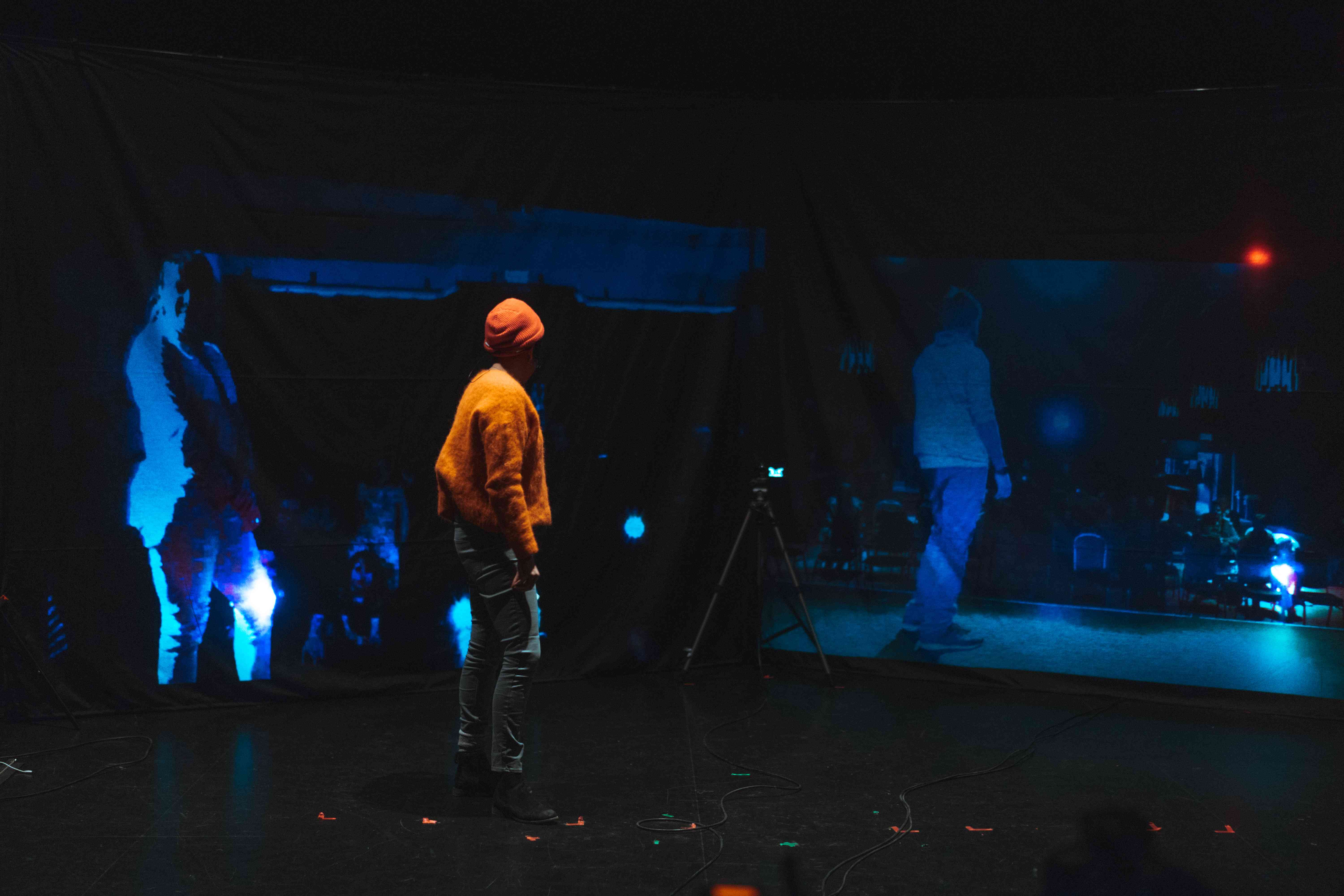
The actors often find themselves in a bifrontal position, with the audience facing them and the other actors/screens behind. Since the performance is primarily guided by voice rather than sight, this required some adaptation—successfully—on their part.
¶ How to engage the audience in the experience?
Interaction with the audience is seen as a way to make the telepresence experience more dynamic and alive. The goal is to highlight the collective, event-like experience through a series of games that not only connect the actors with the audience but also demonstrate the immediacy of telepresence, since the audience’s participation impacts the experience offered.
Interaction allows actors to connect with their respective audiences and to feel less alone on stage. The strategies used range from asides (the actor alone with their audience) to moments of collective voting where the audiences decide on a situation in a distant scene.
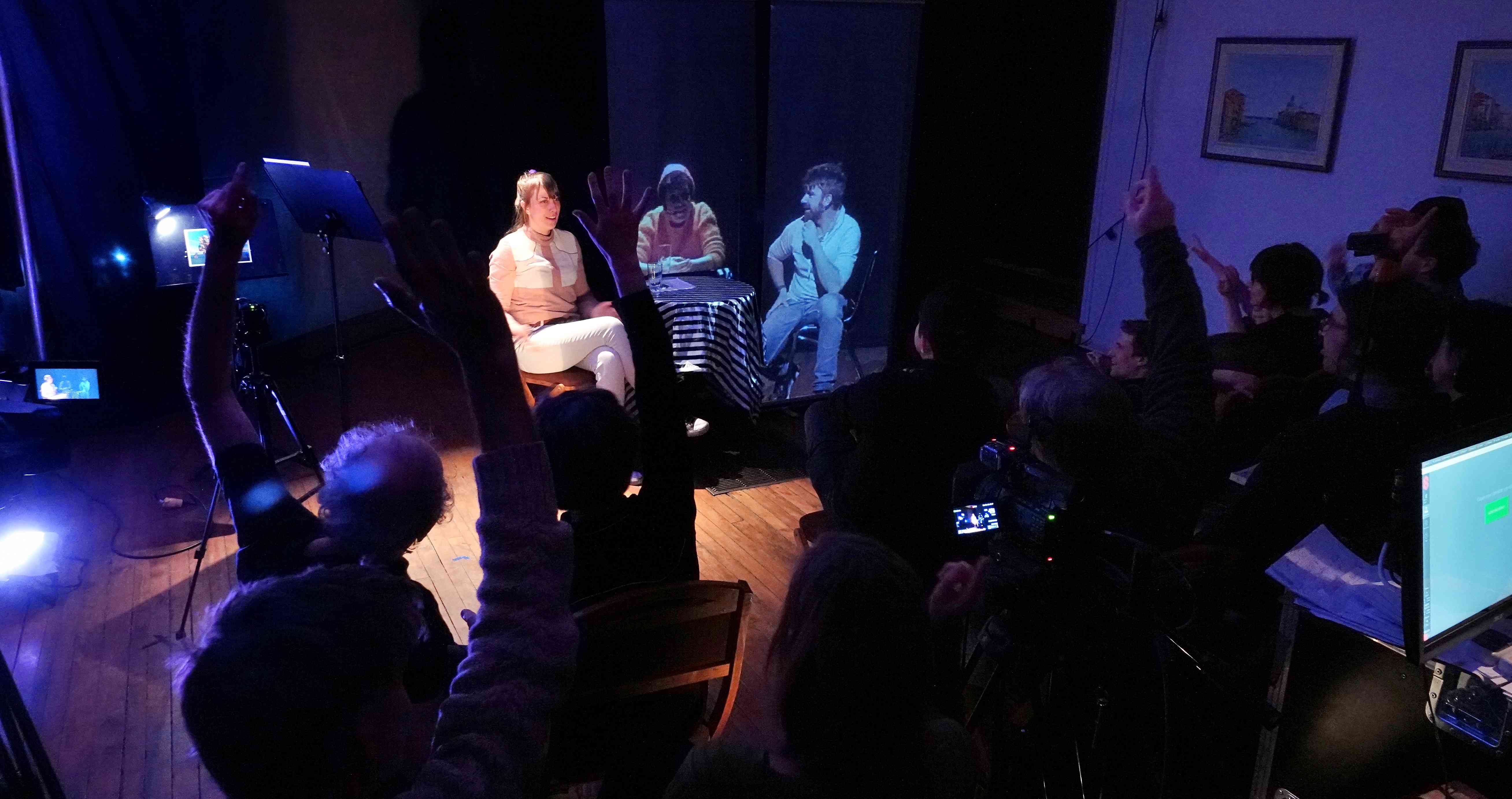
This interaction thus demonstrates to the audience that the experience is indeed happening live. It is important to fully commit to this approach so that the audience is truly aware that their actions have an impact on the performance.
¶ Bibliomix
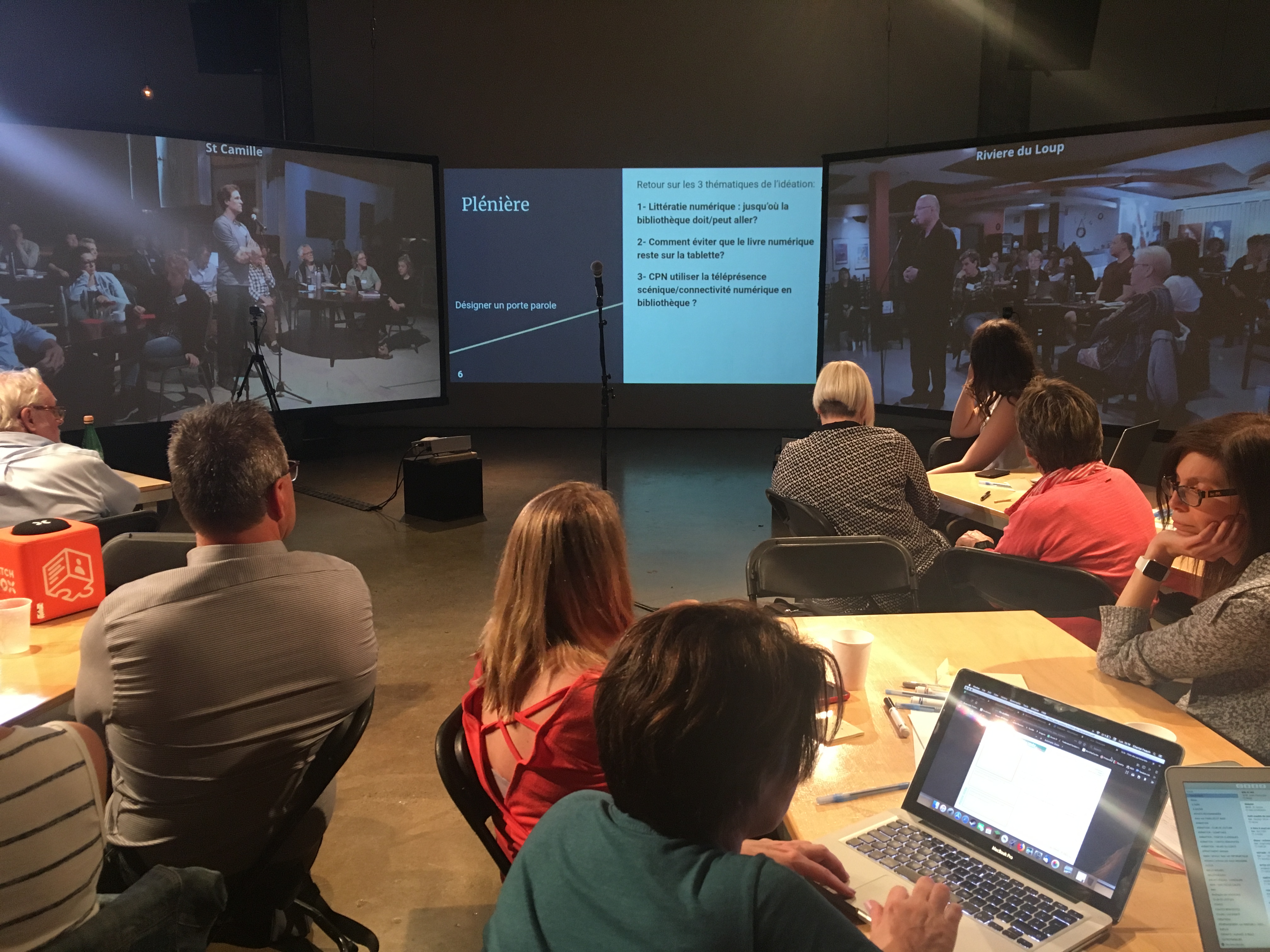
BiblioMix is one of the first projects to connect three venues for an entire day, with the aim of both demonstrating the possibilities of telepresence to a broad audience and involving that same audience in an ideation activity. The research questions mainly address how to implement such a project.
¶ What staging brings together participants across three venues?
The goal was to create a scenography that encourages encounters and exchanges while ensuring visual contact between all participants. Since the day’s program is tightly packed, it is important to find a scenography that works for all activities while maintaining a stable telepresence connection. To accommodate the constraints of all the venues in terms of available equipment and network quality, the decision was made to limit equipment and streams, using only 3 screens and 2 cameras.
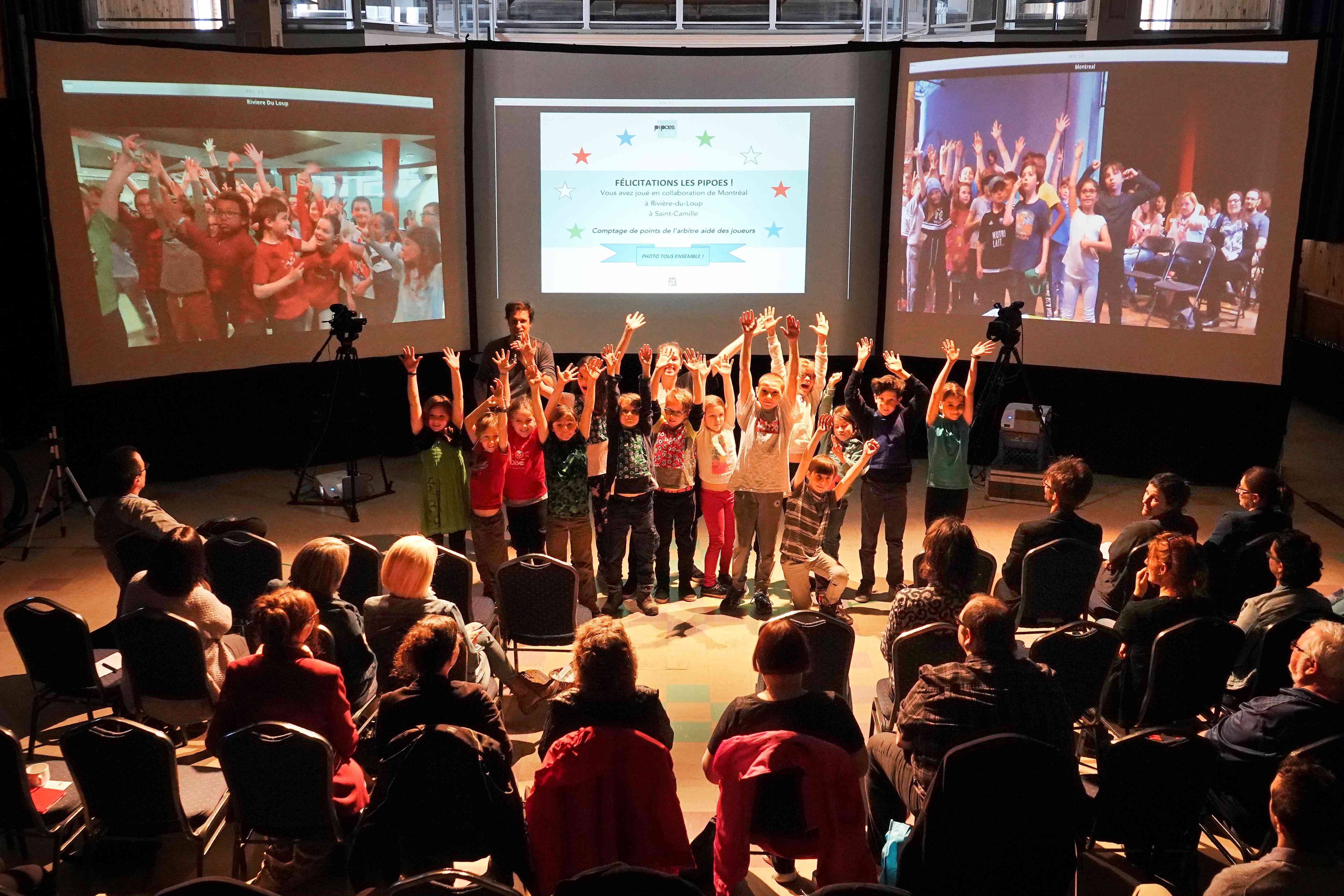
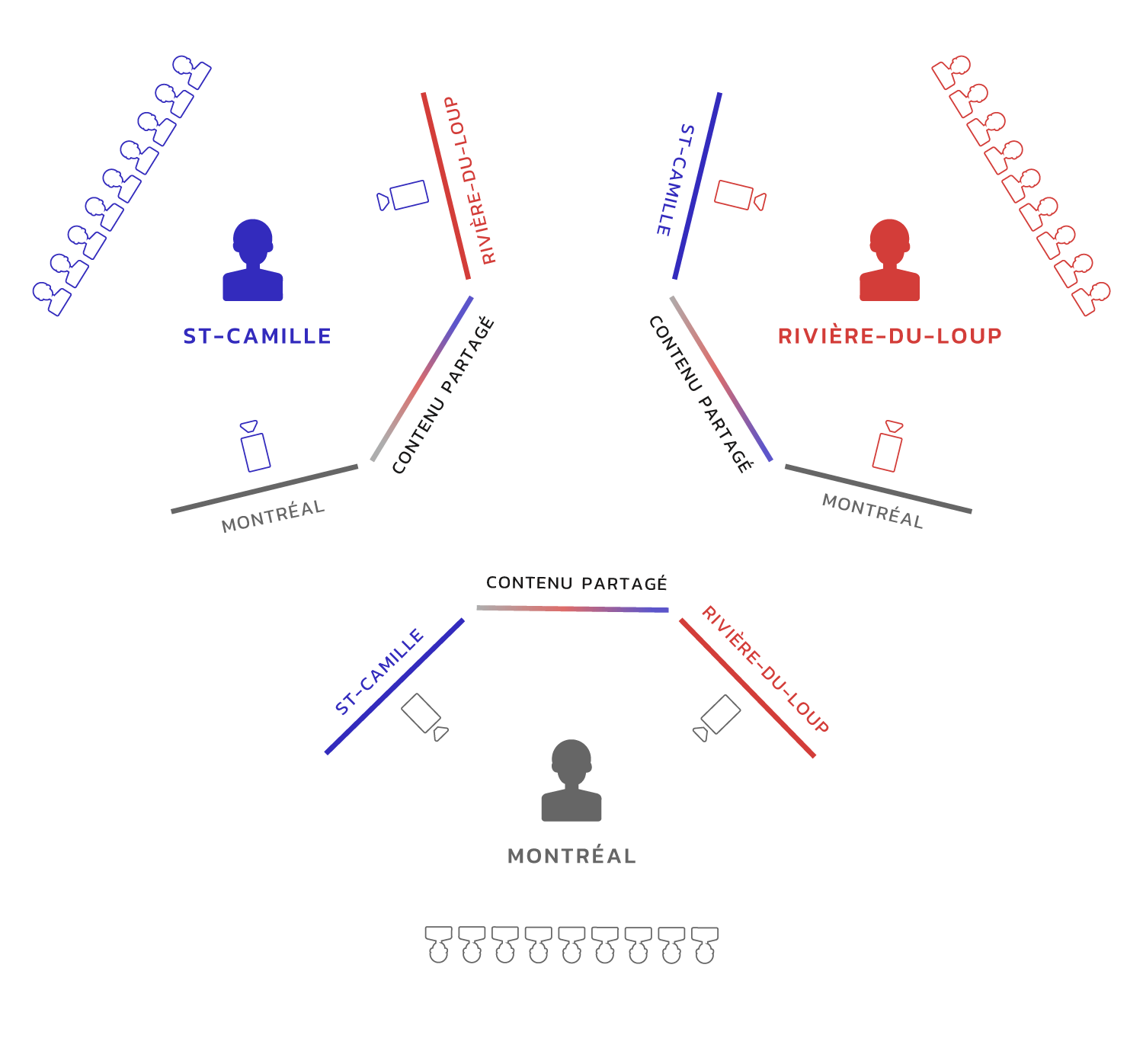
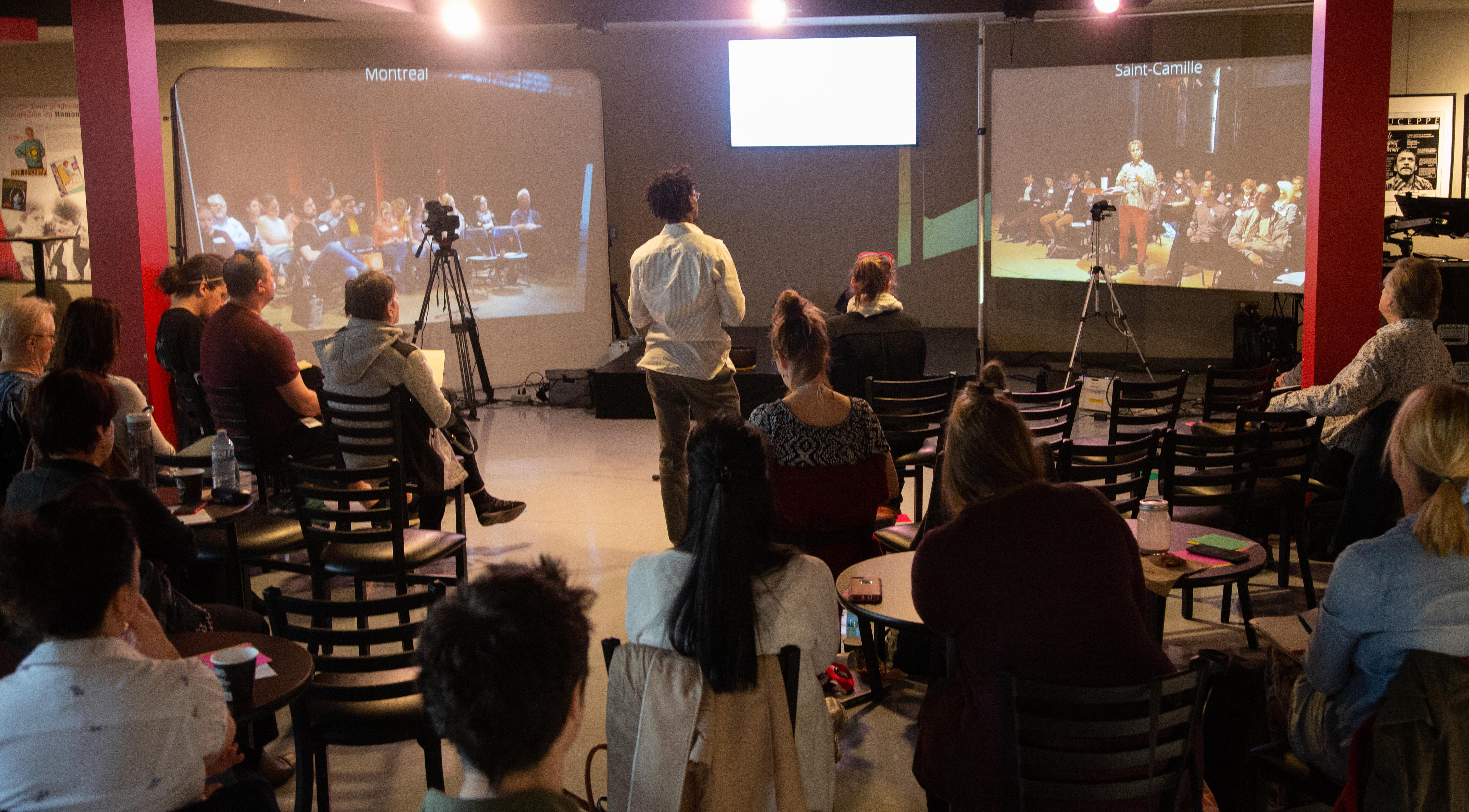
The developed scenography, with two large screens placed at a 120-degree angle facing each audience, gives the impression of a large circular assembly. Sound spatialization, which ties audio to the image, enhances immersion and makes it easy to distinguish where interactions are coming from. By positioning a camera in front of each screen showing the distant audiences, the sightlines work well. Additionally, the goal is to reproduce a human-scale effect, which can sometimes be difficult to achieve. The camera framing of the audiences works better in venues where the audience is more closely grouped, allowing other rooms to see the whole audience.
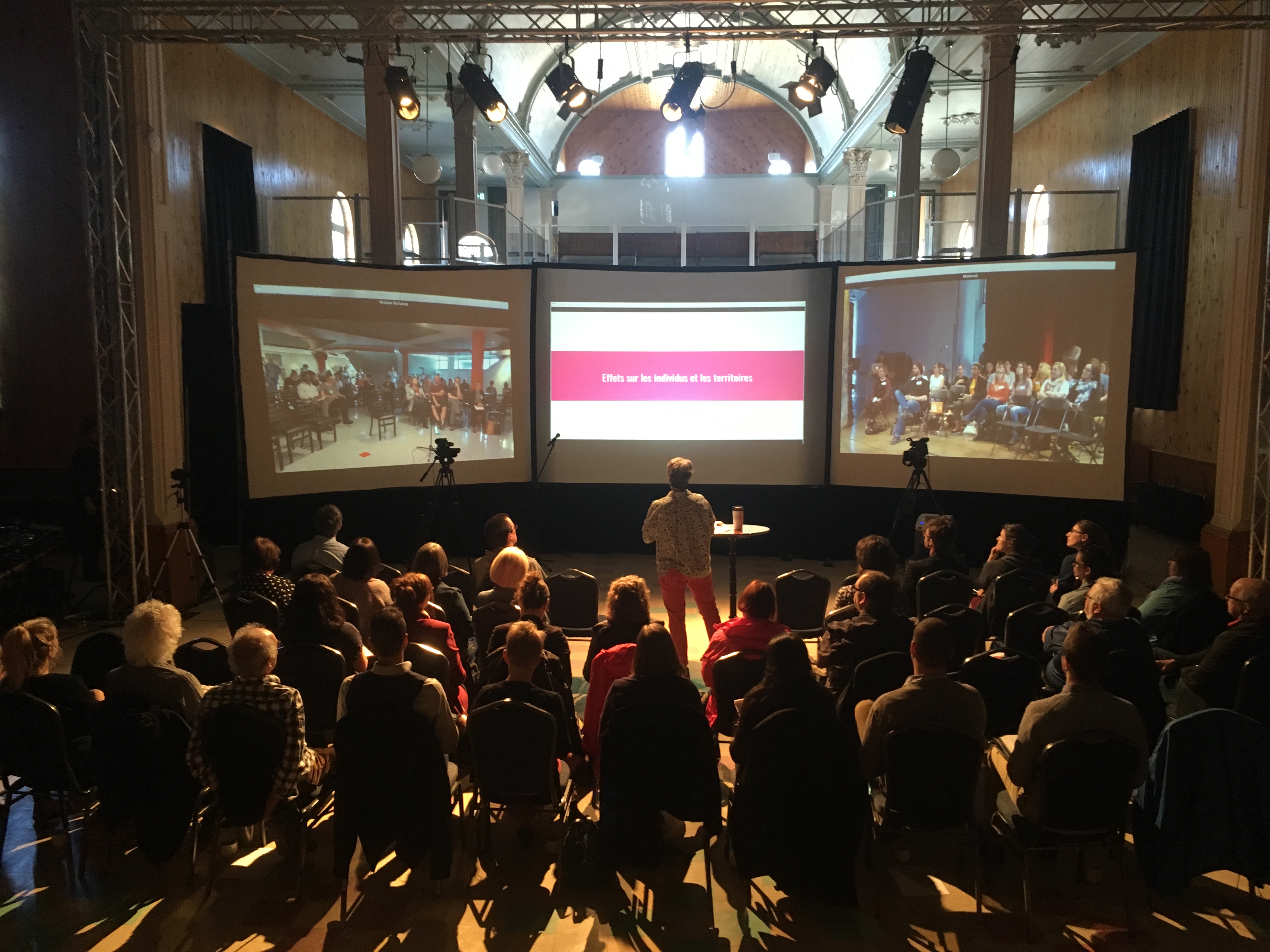
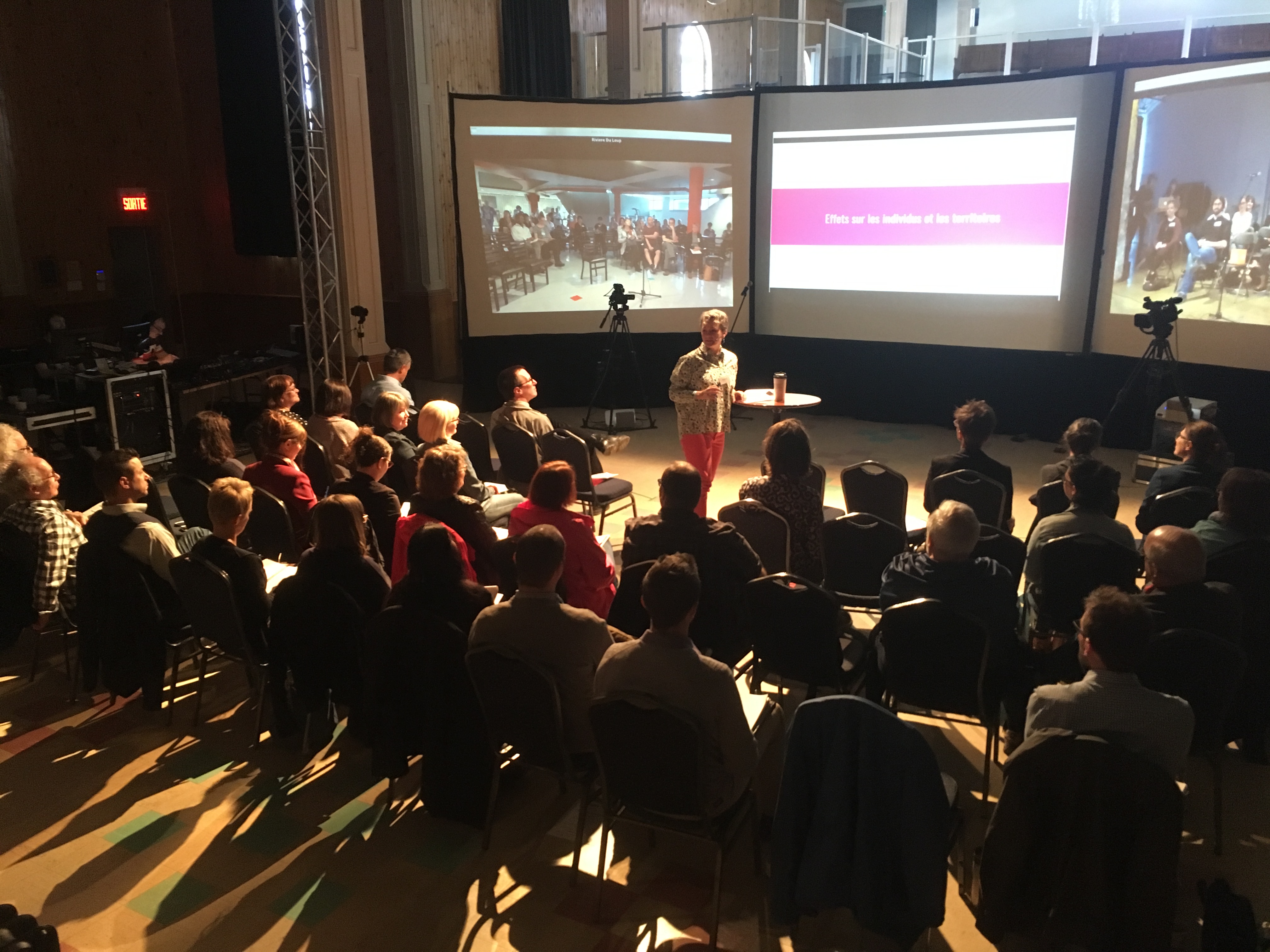
The decision to position speakers with their backs to their local audience in order to face the distant venues favored distant contact, but it was difficult to create interaction between the speaker and their own room. This relationship was unsettling, especially since the speakers were not prepared. A headset microphone for the speaker would have maximized their ability to turn and look at their audience as if they were in the center of a circle. The speaker’s position in this context remains to be developed.
¶ How to engage participants in a game across three venues?
Two games were proposed, giving participants the floor to test different activity formats and interaction styles.
.jpg)
- Collaborative riddle game: guess by mime, sound, or pose in statue. Each class of students was divided into 4 color groups. The goal was to make a color win, not a city. The interactions between the youth were interesting, but the audience had a passive role. The challenges could have been shortened to 1 minute to reduce the total experience duration without compromising the game.
- Book battle: a competitive game aimed at convincing others to read a book. One person per city presents a book and the audiences vote with a colored card for the presentation that convinced them. This activity is very engaging for the audience, but the scoring system is quite tedious.
¶ How to circulate ideas across three venues?
The initial intention was to create inter-regional working groups, but that required too much logistics. In the end, the proposed approach was to build on each venue’s ideas through several phases of work (brainstorming, refinement, synthesis). Each question was passed from room to room via a shared file.

To make the exercise even more meaningful, it would also have been useful to reconvene in plenary to present the idea sheets and to share the day’s reflection results as widely as possible across the different networks.
For all proposed activities (games and ideation), it is essential to test the flow in advance and rehearse so that all facilitators can find their marks and feel fully confident with the exercise.
¶ Create a circus
Create a circus aimed to design a workshop for youth in Montréal and Victoriaville by bringing together three distinct areas of expertise: the visual arts of the Centre d’art Jacques-et-Michel-Auger, circus arts from Tohu, and digital art training from Campus SAT. The project team thus developed a telepresence co-creation workshop during which participating youth created an art short film using stop-motion animation techniques on the theme of the circus. The artistic questions that emerged addressed the installation and the elements that favor co-creation at a distance.
¶ What setup brings remote participants together into a single image?
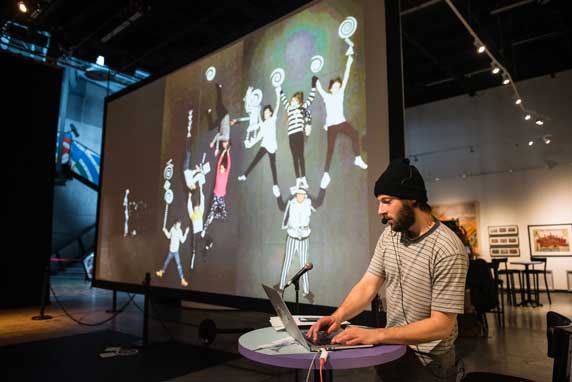
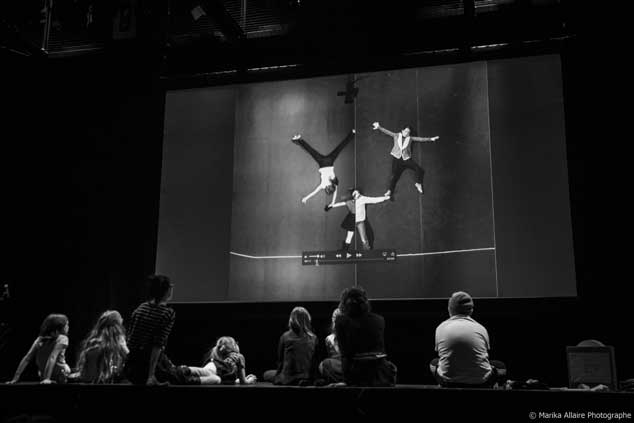
To create a shared video surface for the short film, the design team chose to work directly on the floor, placing an overhead camera and splitting the video surface into two halves. Each city animated its half of the screen: participants in Montréal created in the left space by drawing with their bodies and using props, while participants in Victoriaville used the right space in a similar way. Video creator Sébastien Lafleur was then able to combine the two images to create the short film.

Working on the floor certainly made it easier to create images in the circus universe. Participants could easily mimic figures such as acrobatics or juggling without requiring circus expertise.
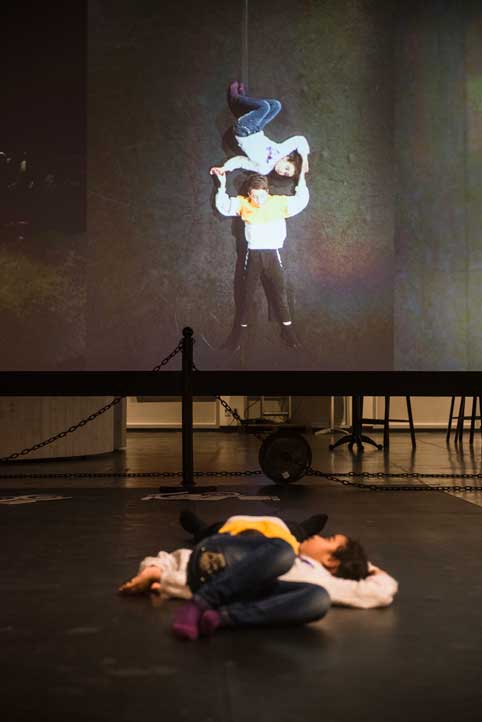
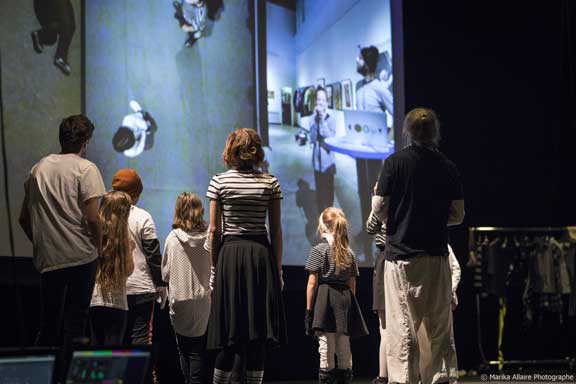
In each city, a large screen projected the collage of the two halves of the screen. Thanks to this projection, the participants in Montréal and Victoriaville could observe the visual result that combined their own movements with those of the other group.
¶ How to create visual cohesion between the two cities on the screen?
For Create a circus, we wanted a shared artistic visual for the co-creation of the film. Several elements were therefore imagined to make the two spaces in Montréal and Victoriaville align.
First, both creation rooms had a black floor to achieve continuity between the two camera takes. The two camera frames were also adjusted to make the visual proportions similar; for example, this allowed a duo of distant participants to be grouped so that they appeared the same size as a single character.
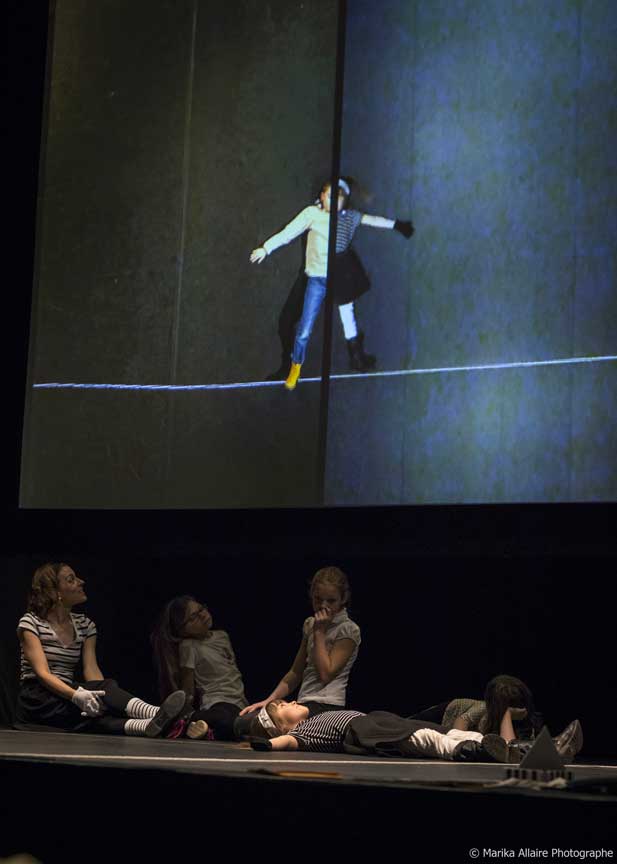
Next, the designers sought a convincing visual effect through their choice of props and costumes. Artist Annie St-Jean first sent visual inspiration photos to participants in both cities so they would have similar influences as a starting point.
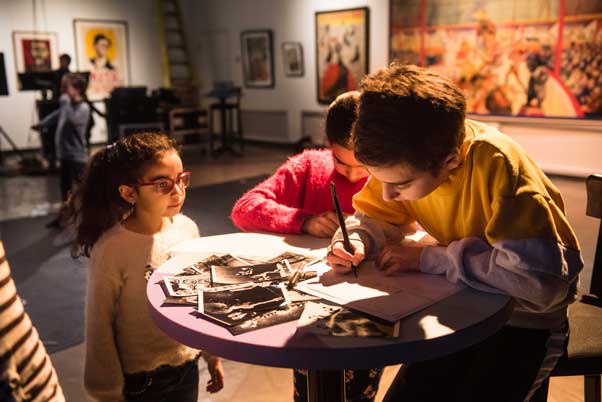

She then designed black-and-white props and sent them to both teams to have common elements during the two shoots.
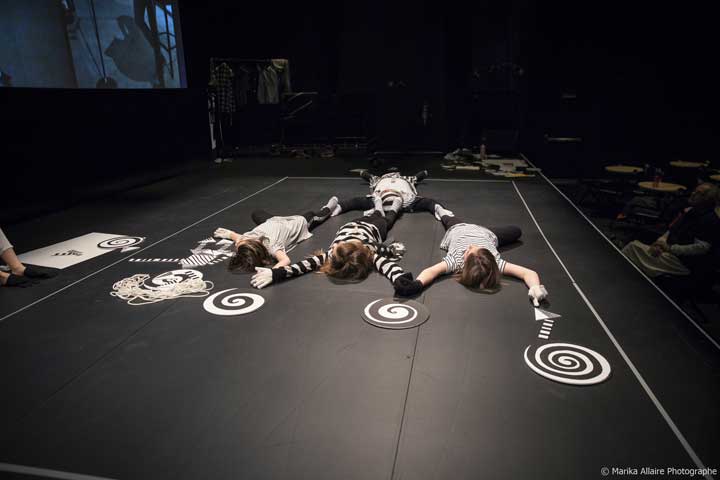
The young participants from Montréal and Victoriaville were initially asked to wear black-and-white costumes. Although the message did not reach the entire Montréal team, where most of the youth ended up wearing colorful clothes, the visual effect then amplified the difference between the teams: one side multicolored and the other in black and white.
-web3.jpg)
¶ What methodology was used for remote co-creation?
In each city, every facilitator wore a headset microphone so they could be mobile in the space while simultaneously maintaining contact with the remote group.
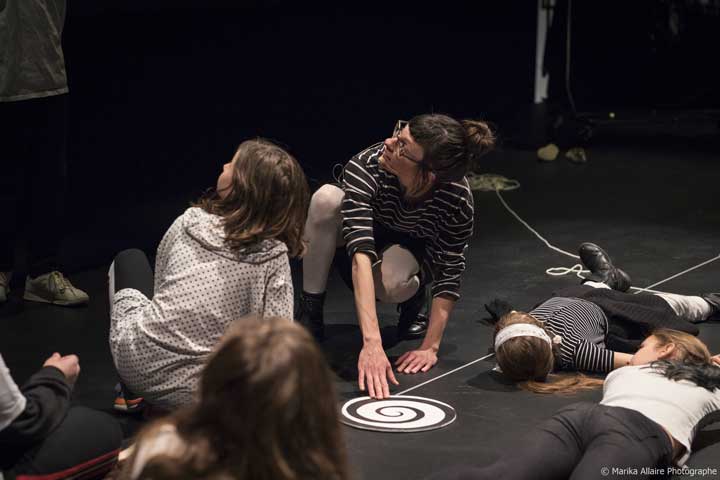
The two facilitators defined their roles in advance: the facilitator in Montréal was responsible for creating the short film, while the facilitator in Victoriaville was responsible for artistic direction. Thus, the creation flowed smoothly between conceptualizing shapes and capturing images in the software.
It was therefore through the voices of the facilitators in each city that participants were guided. Additionally, a microphone was placed in front of a camera on the side for youth who wanted to communicate with the other team, but it was used less since it was somewhat far from the action.
It proved very effective to alternate roles among the participants. Some took on performer roles while others acted as directors, technicians, or prop managers.
web4.jpg)
By defining their roles and tapping into their creativity, participants became more engaged in the process. This also made it possible to involve youth who did not want to appear on screen. Several parents also offered their help, which facilitated the creative process. Finally, to share ideas with the group, many children drew their scenarios around the circus theme.
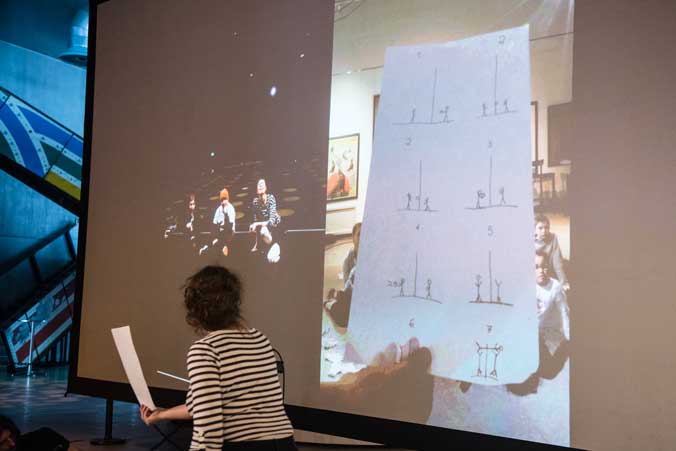
At the end of the creative day, the two groups of participants in Montréal and Victoriaville watched their short film simultaneously; the design team used a second camera filming the facilitator and placed it in front of the screen to organize a face-to-face discussion between the two groups at a distance.
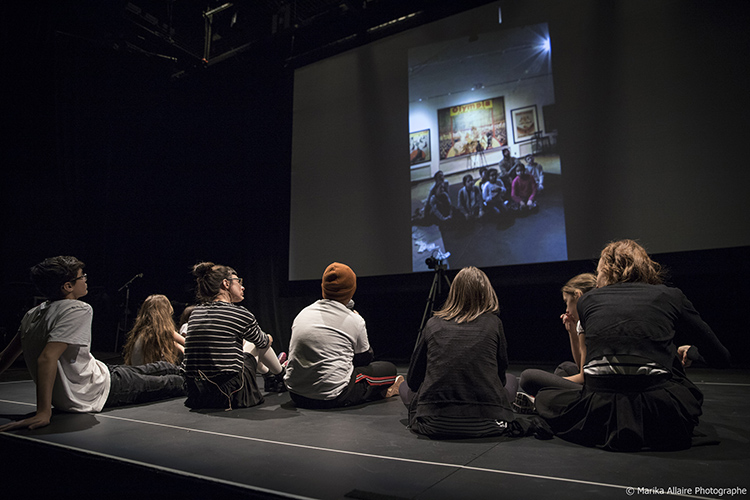
Note: a two-hour workshop is not enough time for young participants to absorb the concepts of the game, telepresence, and stop-motion animation technique. In the case of Create a circus, it was also a very short timeframe to produce a short film. A full day would have been better suited for this type of workshop!
¶ Tshimushuminutsh
Tshimushuminuts is a performance project designed to adapt to different spaces, contexts, and technological situations. At its core, this project centers on meeting Indigenous elders from different territories and invites the audience to participate by asking them questions. In one of the first versions of the performance, Indigenous elders were projected into a theater audience via Skype, live from their communities. In the version conceived with the SCENIC software, the project artists imagined a meeting between an elder from a community near Sept-Îles and an elder from a community near Montréal. The artistic team sought to set up an installation to optimize cross-traffic interactions between the elders and the audiences of the two distinct territories.
¶ Telepresence as a tool for bringing communities together
Thanks to telepresence, the meeting between territories was tangible. The audience gathered in the Salle Jean-Marc Dion in Sept-Îles also included people from the Uashat and Mani-Utenam communities. At the Théâtre Outremont in Montréal, the audience was mostly non-Indigenous. The performance thus highlighted a diversity of perspectives and questions. The need for connection with different communities on Indigenous territories made the experience necessary and particularly coherent with the use of telepresence.
For the occasion, the team designed a space similar to an agora, where audiences felt comfortable asking questions.
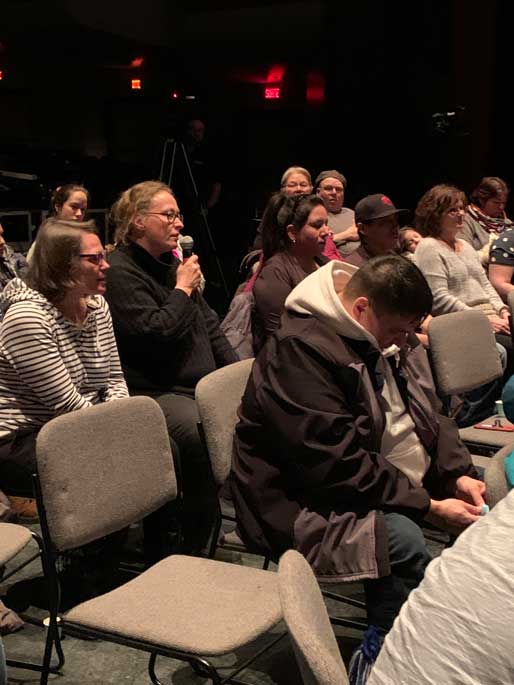
The questions posed to the elders covered a wide range of themes, from their relationships with non-Indigenous people, Métis, and Indigenous peoples, to issues such as loyalty, love, and consumption.
¶ How to encourage interaction between elders and audiences?
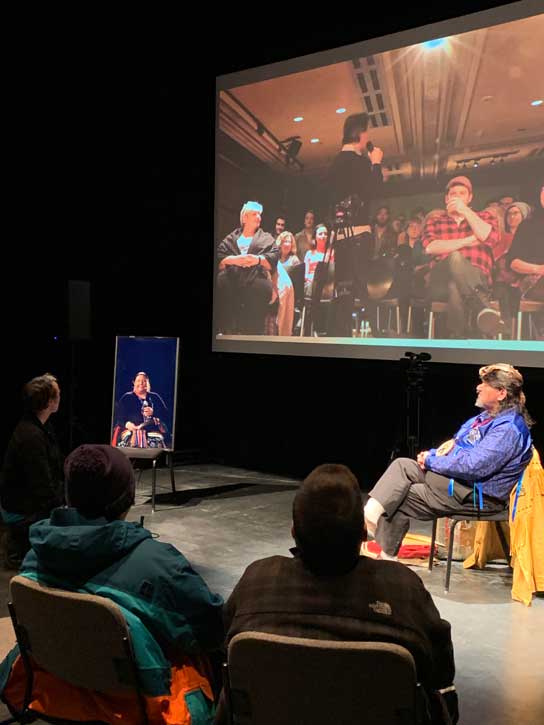
The two participating elders were positioned side by side on stage. In each venue, the local elder was positioned at a 45-degree angle on one side, while the distant elder sat in a chair and appeared on a vertical television screen on the other side of the space.
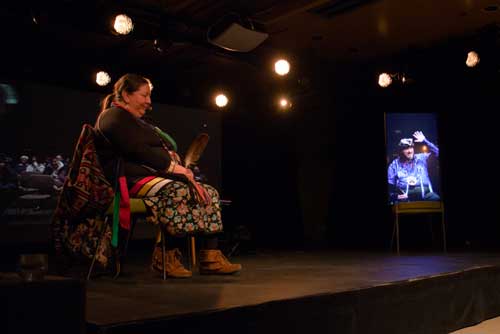
The equal dimensions of the two performance spaces made it easier for the venues to relate to one another and therefore fostered exchange. Although the Petit Outremont in Montréal is a much smaller space than the Salle Jean-Marc Dion in Sept-Îles, the team agreed to replicate the dimensions of the smaller venue in the larger one.
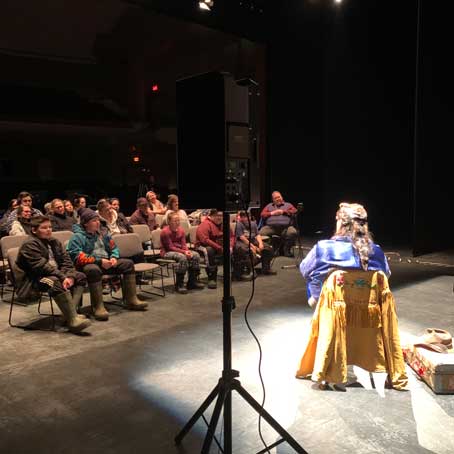
The two audiences in Montréal and on the North Shore faced each other: a camera in the center of the stage filmed the room in a wide shot.
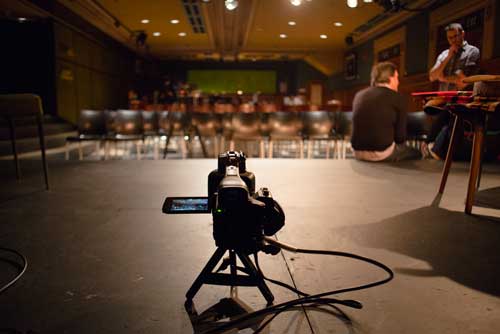
Thanks to the audience dimensions and the camera position, the wide shot gave the impression that the other audience was positioned on the other side of the stage. This face-to-face setup, established as soon as the audiences entered the room, certainly created a sense of unity between them.
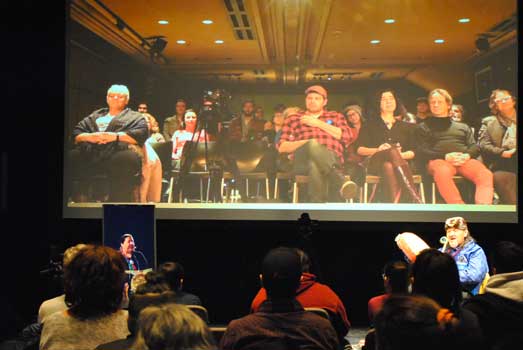
Once this relationship was well established, it became possible to do a close-up on an audience member who was speaking. That way, facial expression was visible and the person could better communicate their intentions at a distance.
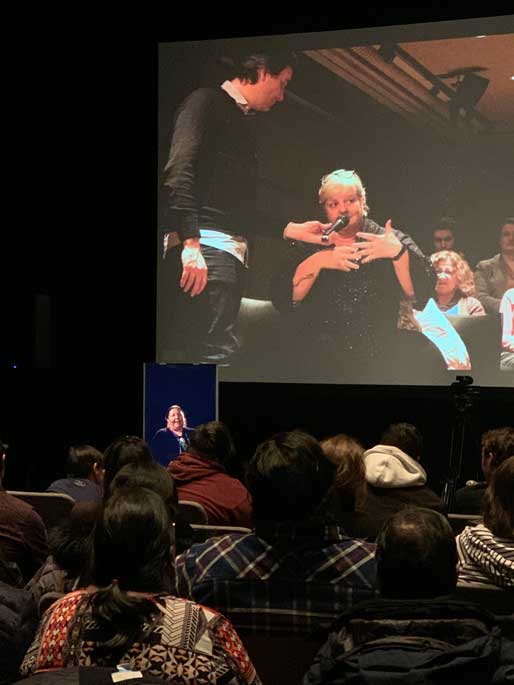
However, because the distant audience was projected behind the elder on stage, the layout did not optimize the relationship between the elder and the audience; a monitor in front of the elder would have improved this.
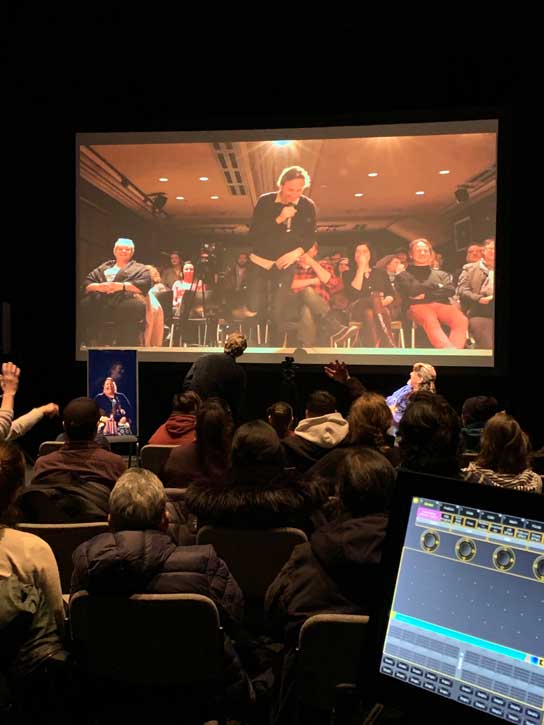
Another essential element in the interaction between the two venues was that each audience was accompanied by a mediator. These two mediators helped keep the flow of speaking turns smooth. Without a dedicated camera focused on them, the mediators guided the conversation with their voices or had to step in front of a camera to be seen by the other venue.
Tip:
In an event involving facilitators or mediators, it is useful to take the time to go over the space and camera framing with them before the activity begins. This way, they will better know where to move to interact with the other room at a distance!*
¶ Masq’ensemble
The Masq’ensemble project was designed by Ghislaine Grante Grante, an artist specializing in masked performance, along with René Barsalo, a digital designer. This original installation was conceived to create with youth as part of the Masq’alors Festival in Saint-Camille. During the school break week, two groups of young participants from Rimouski and Saint-Camille met via telepresence. They were able to create masks using recycled materials and thus explore body expression through masked play and create a collective work presented to an audience. The project’s creative team aimed to invent a playful, intuitive space conducive to co-creating a masked piece in which the audience had a unique viewpoint on the performance.
¶ How to create a playful and intuitive installation?
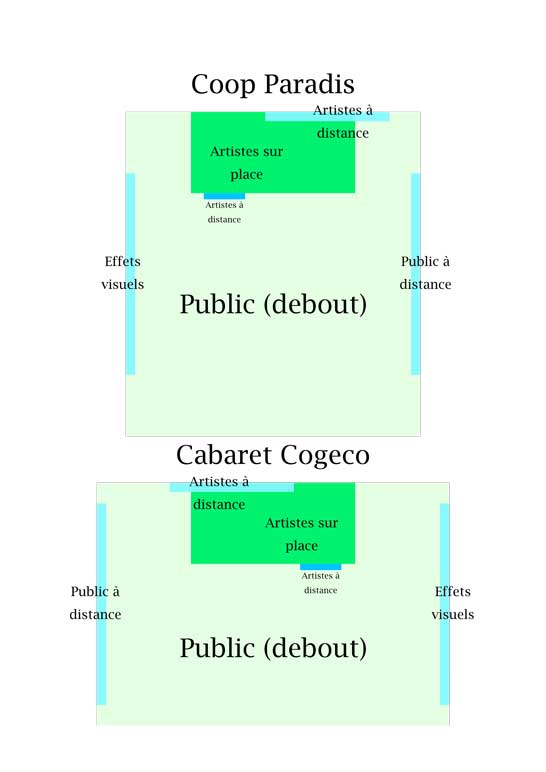
For this project, the designers invented a true play machine that young people can appropriate. The base of the installation consists of placing a screen between the young performers and the audience, visible from both sides. Using green-screen compositing, the two locations are merged on the screen. Like a puppet theater, the audience has access to the final result of the creation, while the young performers create the images live, hidden behind the screen.

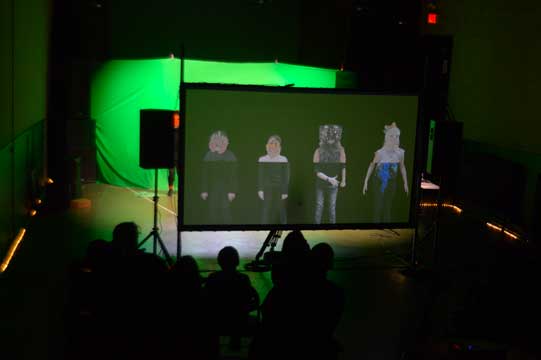
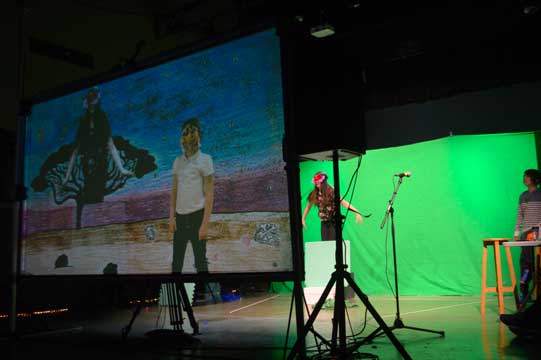
Using video compositing, the young participants could draw their props as well as the backgrounds that appeared behind them. This required carefully defining dimensions so that the performers gave the impression of inhabiting the imagined space.
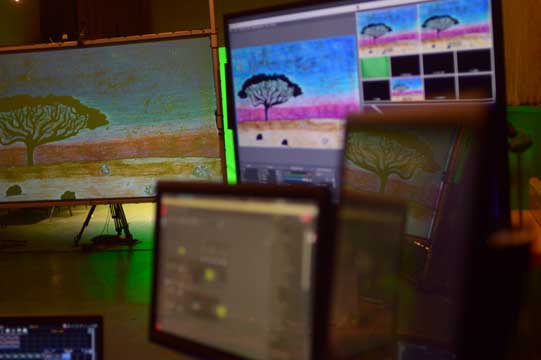
Since the video effects software is programmed so that anything green becomes invisible, many play effects are possible.
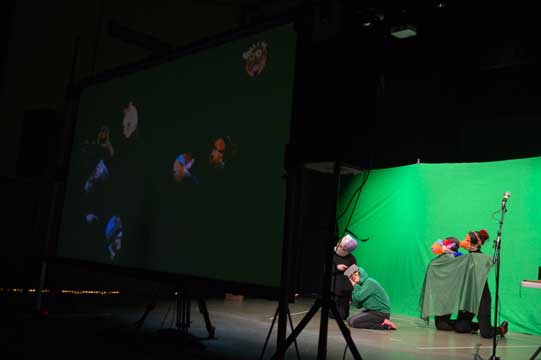
These can sometimes lead to magical results, such as the appearance or disappearance of props, people, or body parts.
The young performers, among other things, manipulated pieces of green cloth to create invisibility capes, and the effect was greatly appreciated.
From the audience’s point of view, even though it was announced that the young performers were from two different cities, the illusion was that they were in the same space.
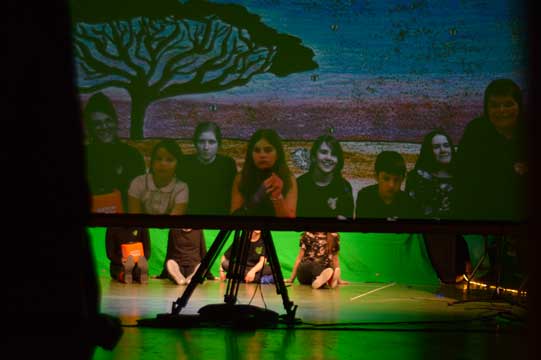
For the performers, this illusion game required body composition work where they had to, for example, play with invisible characters at their side that were visible on the screen in front of them.
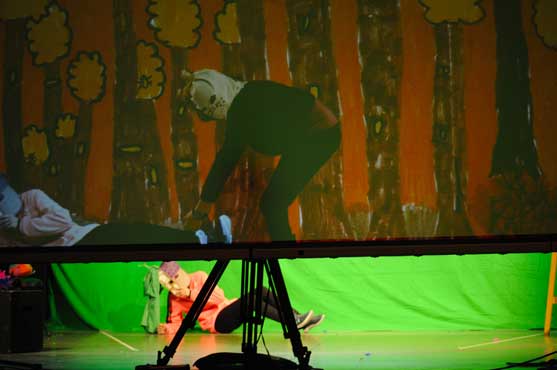
After the performance, the audience was invited to explore backstage and see how the sketches were made and which city each character came from. Some privileged audience members seated on the sides of the room appreciated having a backstage view during the performance. Two perspectives were then possible: on one side, a look at the mechanics of a group of performers, and on the other, the magical illusion of the final result.
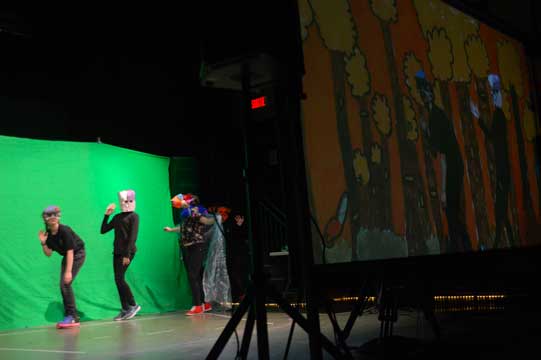
To add to the show, the young performers from Rimouski handled the sound design by creating sound effects to accompany the play. Since the sound came from a single location, the sound operation was easier.

Note: when playing with the green-screen compositing technique, it is necessary to have very large green surfaces as a backdrop—and ideally on the floors as well—to allow freedom of movement and navigation for the performers. The narrower the green surface, the more limited, even restrictive, the camera framing will be!
¶ What facilitation methodology was used to build cohesion between the two groups?
A key aspect of this project’s success was the focus on cohesion among the young performers. To that end, the facilitators organized preparatory activities during which participants learned about the other city—its geographical location, activities, environment, population, etc. Then, to ensure the entire troupe felt united, the two groups played games together to get to know each other. Over five days, staying connected at all times, the young performers built real team cohesion by being engaged and fully immersed in the experience.
With the intuitive setup, the youth understood the relationship to the other room well; some games between the two groups, such as creating a two-person body, quickly developed an understanding of working remotely.
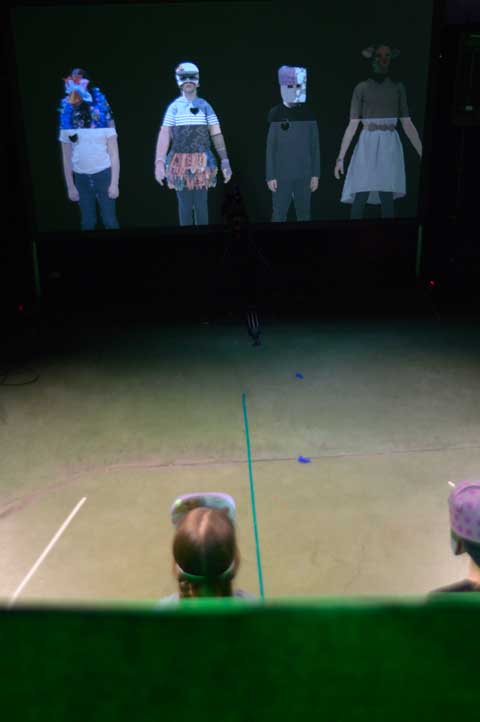
Another factor that contributed to Masq’ensemble’s success was the trust the facilitators had in each other. They had a good rapport for managing time: they agreed on the length of each phase and adjusted as needed. Additionally, technical adjustments and connection losses are expected, and the strong trust between the facilitators becomes an essential tool in those situations.
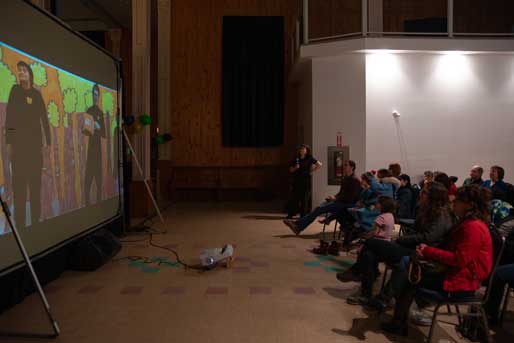
¶ What communication strategy was used to foster the relationship between the two groups?
In addition to being well supported in managing time, the youth in both remote groups were able to communicate easily with each other. First, the setup with cameras and lighting ensured that both groups had good visibility of the other space. Then, the tool used to facilitate communication — the Catchbox microphone — proved very effective. It is a microphone that can be tossed from one person to another, allowing multiple people to speak efficiently and quickly. As a wireless device, it provides excellent responsiveness for communication between the groups.
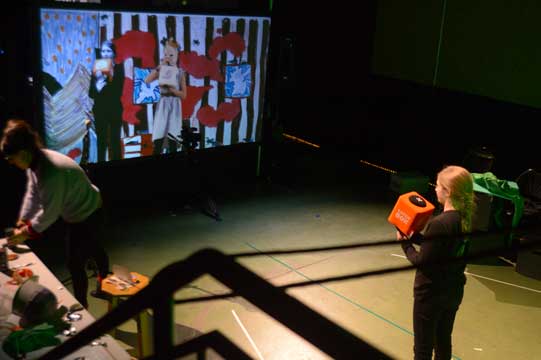
In this regard, the participants quickly understood the mechanics of the Catchbox microphone and took their turns speaking with leadership. Together, they took the time to listen to each other; having a single microphone made it easier to be attentive to the speaking turns and also helped reduce echo. However, the facilitator responsible for directing had to add a headset microphone during the week of creation to make her tasks easier. This required increased vigilance regarding the youth’s attention and the technical management of the sound.
On the visual side, the young participants alternated between four scenes in the video effects software throughout the workshop. The first scene was a face-to-face format for discussion moments. Then the groups moved through two split-screen scenes, first in vertical format and then in horizontal format, to create characters using two remote participants.
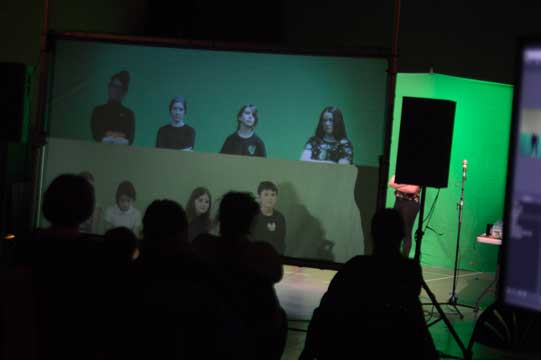

To conclude, the participants experimented with the final scene using video compositing to create short sketches together with a pre-drawn background. For this scene, the two technical leads had to display the same scene at all times so the youth could create from a common image.
Note: When a facilitator uses a headset microphone, it is essential that they have control over their device. This allows them to turn it off during communications with the local team and turn it on when speaking with remote groups. Without control of the headset, there is a risk of overloading speaking turns and losing team engagement.
¶ Isidore Remix
The Isidore Remix project developed over three residencies and culminated in a live performance. The project artists wanted to celebrate the work of Isidore Soucy through a fusion of technology and traditional music. Their aim was to have two audiences in Rimouski and Alma interact remotely, driven by the world of traditional music. In addition to imagining ways to play music at a distance, the artists developed a technique for making two groups sing and dance remotely, and even to make a puppet “gigueur” dance via remote control.
-26-web.jpg)
¶ How to organize a space for playing music and dancing at a distance?
The creators of Isidore Remix imagined different installation layouts before conceptualizing the final setup. Starting from the intention of directing the artists’ gaze toward the audience most of the time, the first diagram placed a small video screen in front of the artists on stage so they could see the remote performers. The audience, in turn, could see the performers on a screen at the back of the stage.
This installation allowed the artists to always face the audience without having to turn around. However, the interaction between the parties was not intuitive and was difficult for the audience to see. The artists therefore modified the setup by adding an angled screen on the stage. In this way, the same screen allowed both the audience and the performers on stage to see the remote musicians.
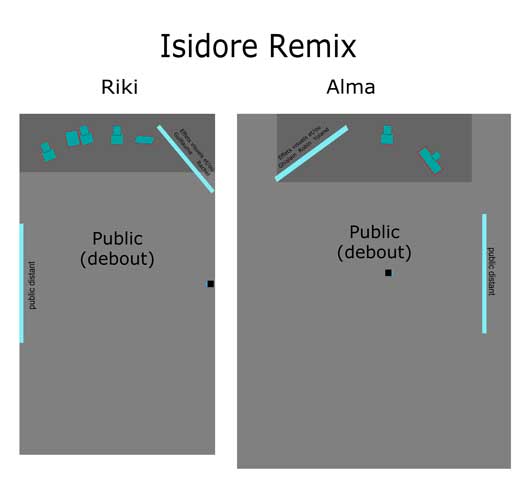
This method proved very effective for facilitating communication between the different parties and for making the telepresence situation clear to the audience.
-06-web.jpg)
However, a compromise remained: the musicians could have a slightly distorted view, and some audience members seated at the ends of the screen did not have an optimal vantage point.
An additional screen was added on the side of the audience. This screen was used at certain moments to project the distant audience. In Rimouski, the screen was to the left of the audience, while in Alma, it was positioned to the right. This arrangement allowed for visual communication between the two remote audiences.
-25web.jpg)
For each musical piece, the team decided which video stream was sent to each screen. The video designer, for her part, alternated sending her visual creations to the onstage screen or the screen positioned in the audience.
-20-web.jpg)
¶ How to work with latency in traditional musical works?
Since latency is inherent to telepresence, the project musicians imagined different ways to work with this constraint.
For the majority of musical pieces, the artists used the cascade technique: the first venue played a score that was then sent to the second venue. However, this technique means the first venue does not hear the second. During the performance, depending on the musical pieces, the creators alternated between those playing solo and those playing with both audio streams. In the venue where the artist played solo, the team used the screen to broadcast the VJ’s interactive imagery rather than projecting the remotely inaudible musicians.
Another way to work with the constraints was to apply the call-and-response technique for the song “À l’an 2033.” In this way, the short latency is masked by passing the turn from one speaker to another. Additionally, thanks to the lyrical nature and soft attacks of the song, it became easier to forget the latency. Performing this song at the beginning of the show allowed the audience to naturally become familiar with the telepresence context and understand the latency issues.
As a result, the call-and-response song was divided between the audiences in Alma and Rimouski. Each audience had its dedicated moment to sing its part, becoming aware of the presence of the other audience. This procedure raised another question: how to identify which audience should respond? With the camera facing forward, when the two groups of artists pointed ahead, they seemed to address both audiences at once. To resolve this issue, they used a sign indicating “Alma” or “Rimouski” when it was time to sing.
-15-web.jpg)
To make the two venues dance together, the team oriented the dancers toward the screen projecting the distant audience.
-30-web.jpg)
In this way, the line of dancers created the illusion of stretching toward the other venue. The “caller” explained the process and “called” the movements for both groups from Rimouski. By placing the first couple from each city at the edge of the screen, it was easy to orient and guide the dancers from both cities in a synchronized way.
-04-web.jpg)
¶ Encouraging interaction between venues using connected objects
The artists of Isidore Remix had previously developed a connected “gigueur being” controlled by a tap dance board.
-05-web.jpg)
For this experience, the tap dance board located in Alma controlled the puppet located in Rimouski. In addition, the musician in Rimouski connected his computer to the MIDI signal from the remote board. He programmed different base notes depending on the steps on the board (heel, toe, left, and right) so that the tap board became musical and interactive. At the same time, the VJ programmed images to appear based on the movements on the board.
To ensure the audience understood these interactions, the artists took the time to explain step by step the connection between the objects and the music.
-22-web.jpg)
First, they introduced the “gigueur being” and then explained how the connected board worked. Next, the creators presented the remote jig through a demonstration and also clarified how the video interacted with the board. Finally, the artists added the programmed musical notes to complete the setup. It is therefore thanks to a good understanding of the device and the creative process that the audience could appreciate all the musical and visual elements together.